- The Styling Atelier
- September 11, 2026
- 7
Why Proportion Is the Secret Behind a Great Outfit
You can wear the right pieces, the right colors, and still end up with a look that feels completely off. The difference often comes down to proportion.
It is easy to see a piece online or in a store and immediately imagine it in your wardrobe. The silhouette looks beautiful, the styling feels effortless, and you want it. But there is a question we often forget to ask: How will this piece work with my body?
A garment can look incredible on someone else and fall completely flat on you. That does not necessarily mean the piece is wrong, or that your body is the problem. It may simply mean that the proportions of the garment are interacting differently with your own proportions. The length of a jacket, the placement of a waist, the width of a trouser leg, or where a skirt ends can change the entire balance of an outfit.
Understanding your proportions gives you another way to look at clothes. This will also help you shop better. Instead of asking whether something is simply “flattering,” you can start asking what a garment is doing to your silhouette, where it creates visual breaks, and how different pieces relate to one another.
In this article, we will look at how proportion in fashion works, how to understand your own body proportions, how you can identify them yourself, and how to use that knowledge when styling your clothes. We will also look at how garment length, volume, width, waist placement, and layering can change the way a silhouette is perceived. Because proportion is not about changing your body. It is about understanding the relationship between your body and the clothes you choose to put on it.
What Is Proportion in Fashion?
Proportion in fashion is the relationship between the length, width, volume, scale, and placement of clothing in relation to the body and to other garments. It influences where the eye sees the waist, where a silhouette widens or narrows, and whether an outfit feels balanced, dramatic, elongated, compact, or deliberately unexpected.
For the fashion conscious woman who wants to understand why an outfit works, proportion is one of the most useful ideas to learn because it sits underneath almost every successful silhouette.
The important distinction is that proportion is not the same thing as fit. Fit asks whether a garment accommodates the body correctly. Scale considers the size of an element in relation to the body or the garment as a whole. Proportion considers the relationship between those elements.
The Fashion Institute of Technology defines proportion as the relationship between parts of a design, while scale concerns whether those elements are sized appropriately within the overall design. FIT also separates proportion from balance, which concerns visual weight.
That distinction matters because an outfit can fit perfectly and still have uninteresting proportions.
A blazer can fit your shoulders beautifully but end at an awkward point on the torso. Wide leg trousers can fit perfectly at the waist but create a completely different silhouette depending on their rise and length. A long coat can transform the relationship between your legs and torso without changing your body at all.
Why Does Proportion Matter in Fashion?
Proportion is the art of deciding where the eye should look.
When you get dressed, the eye reads the outfit as a composition rather than as isolated garments. It notices where the color changes, where the fabric ends, where the waist appears, where volume begins, and where the silhouette becomes narrow or wide.
This is why two women can wear the same outfit and create completely different visual effects. The clothes are identical, but the relationship between the clothes and their bodies is not.
Fashion designers have understood this for centuries. Proportion can make a skirt appear fuller, a coat appear more dramatic, a jacket feel sharper, or a leg line appear longer. It can also deliberately disrupt conventional balance.
A study examining 4,026 Vogue photographs from 1945 to 1995 found that proportion was a significant part of how fashionable clothing was constructed. The most frequent vertical proportion observed was 35/65, while 50/50 appeared most frequently horizontally. The study is useful because it demonstrates that proportion can be analyzed, but it does not prove that one ratio is universally more beautiful than another.
That distinction is crucial. Fashion is not mathematics pretending to be objective beauty.
What Are Body Proportions in Fashion?
Body proportions in fashion describe the visual relationship between different areas of the body, such as the torso and legs, shoulders and hips, waist and lower body, or upper leg and lower leg.
The goal should not be to “correct” your body. Your body does not need correcting.
Instead, understanding body proportions gives you another styling language. You can decide whether you want to emphasize a particular area, create continuity, introduce contrast, or deliberately exaggerate a shape.
How Do You Read Your Torso and Leg Proportions?
Start with your vertical line from head to toe and then consider the relationship between your upper and lower body.
Your belly button can give you a useful visual reference. Stand naturally and look at where your waist and belly button sit in relation to your overall height. You can also place your hand across the area around your belly button and compare the apparent length above and below it. This is only a styling observation, not a scientific body classification.
If your torso appears shorter compared with your legs, a lower or mid rise trouser can visually give the upper body more length. If your torso appears longer, a higher waist can shift the visual starting point of the legs upward.
The clothing creates the illusion. That is the fascinating part of proportion. A garment does not have to change your body to change how your body is perceived.
How Do Shoulders and Hips Affect Outfit Proportions?
Shoulders and hips create another important relationship.
If the upper body carries more visual width, adding volume or structure to the lower half can create a more distributed silhouette. Wide leg trousers, fuller skirts, or a stronger hemline can shift visual weight downward.
If the hips carry more visual width, structure, volume, or detail around the shoulders can redistribute attention upward. This is not about hiding either area. It is about understanding visual weight.
A fitted top with a wide trouser creates one relationship. A wide top with a narrow trouser creates another. Neither is inherently better.
How Does Waist Placement Change Body Proportions?
The waist is one of the most powerful break points in clothing.
A high waist can visually lengthen the legs by moving the perceived beginning of the lower body upward. A lower waist can create a longer looking torso. A dropped waist moves the visual center of the outfit downward.
This is exactly why the current return of dropped waists feels so different from years dominated by high rise dressing. The waist is not merely a functional part of a garment. It is a visual control panel.
How Does Clothing Change Proportion?
The most useful way to understand proportion is to see clothing as a system of relationships.
1. High Waist vs Low Waist
A high waist creates a higher visual starting point for the legs. A lower waist gives the torso more visual territory.
Neither should be treated as a universal rule for every body. The same rise can create different effects depending on the length of the top, the garment volume, the shoe, and the outerwear. A long high waisted skirt with a short jacket creates a very different composition from high waisted trousers with a long tunic.
2. Long vs Cropped
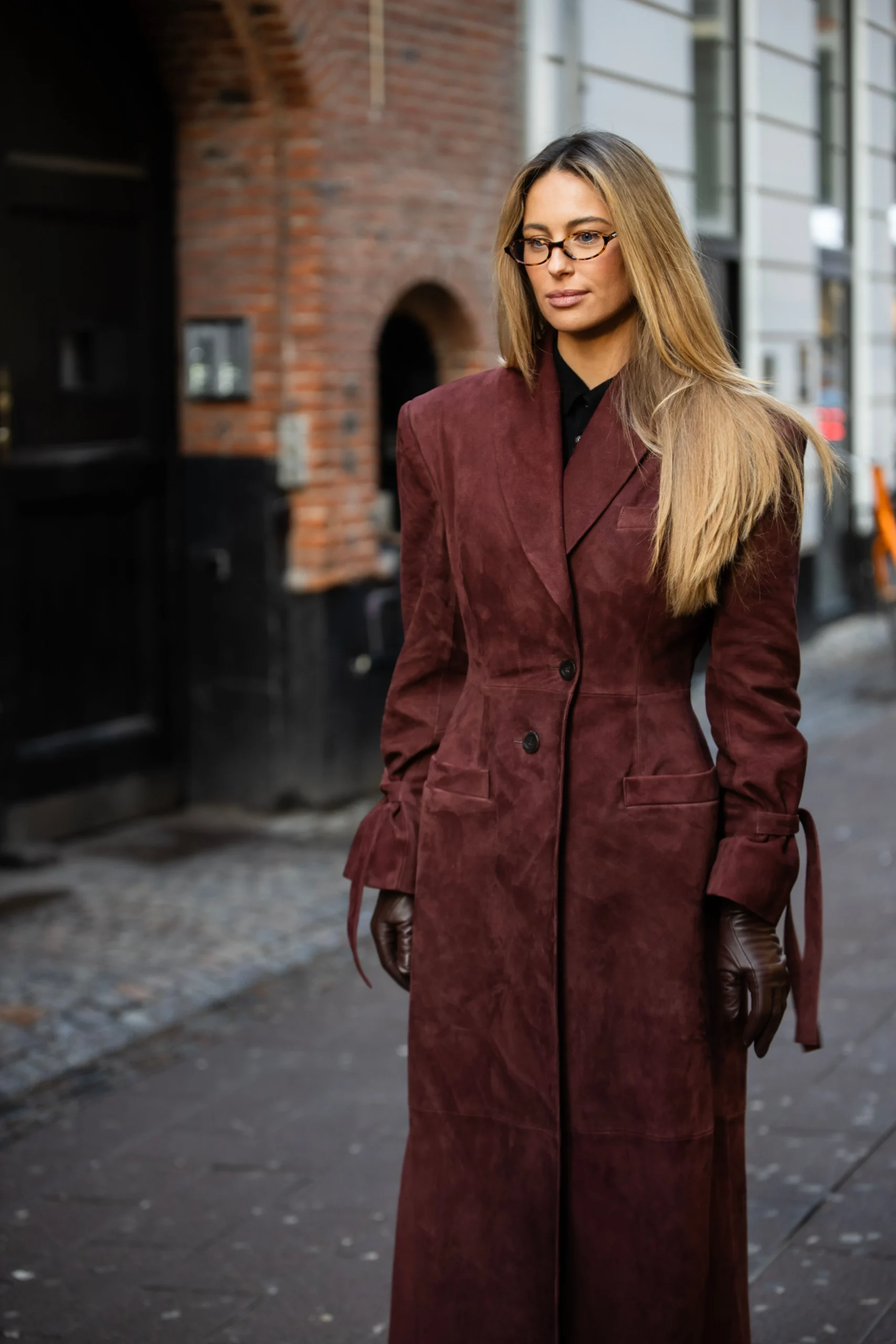
Length determines where the eye encounters a break. A cropped jacket can make the lower body appear visually longer because the garment ends higher on the torso. A long coat creates an uninterrupted vertical column and can make the outfit feel more dramatic.
This is one reason cropped jackets have become increasingly important in 2026. British Vogue has reported a shift toward closer fitting cropped jackets after several seasons of oversized outerwear.
For modest dressing, this creates an especially interesting possibility: a cropped jacket can sit over a longer dress, skirt, or tunic, creating contrast without sacrificing coverage.
3. Wide vs Narrow
Width is about visual expansion.
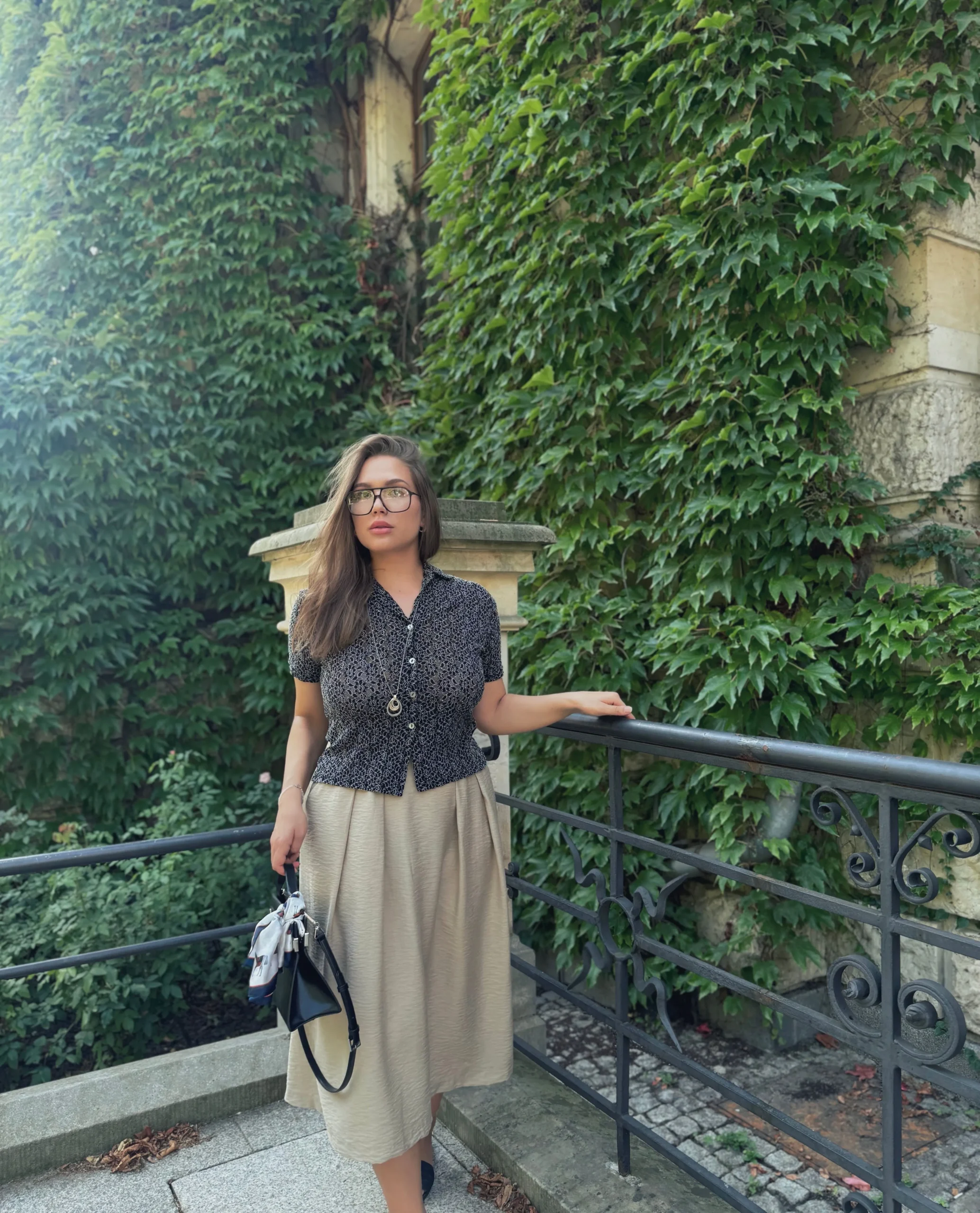
Wide leg trousers create volume below the waist. A narrow trouser creates a cleaner, more continuous leg line. A broad shoulder can make the upper body feel architectural, while a narrow shoulder can make the lower body appear more dominant by comparison.
The most interesting outfits often place opposing widths together. Wide trousers with a precise jacket. A narrow skirt with an oversized coat. A fitted top beneath a full skirt.
Proportion becomes exciting when the widths disagree.
4. Oversized vs Fitted
Oversized dressing works because volume creates visual weight.
An oversized blazer with a sleek trouser creates contrast. An oversized shirt with a slim skirt creates another. An oversized coat over a long, narrow dress creates a strong vertical silhouette.
The mistake is assuming that oversized means shapeless.
Good oversized clothing is still designed. Shoulder placement, sleeve length, hem length, fabric weight, and construction determine whether volume feels intentional or simply too large.
5. How Does Volume Change an Outfit?
Volume is not a body type issue. It is a design tool.
A bubble skirt, balloon trouser, pannier skirt, dramatic sleeve, oversized coat, or full peplum changes the amount of space occupied by the silhouette.
British Vogue identified playful proportions as a defining theme of the Fall Winter 2026 collections, pointing to dramatic trains, full pannier skirts, cinched peplum waists, and dropped waists across the runways.
The message is clear. Fashion is interested in changing the shape of the outfit itself.
6. Why Do Coat Length and Skirt Length Matter?
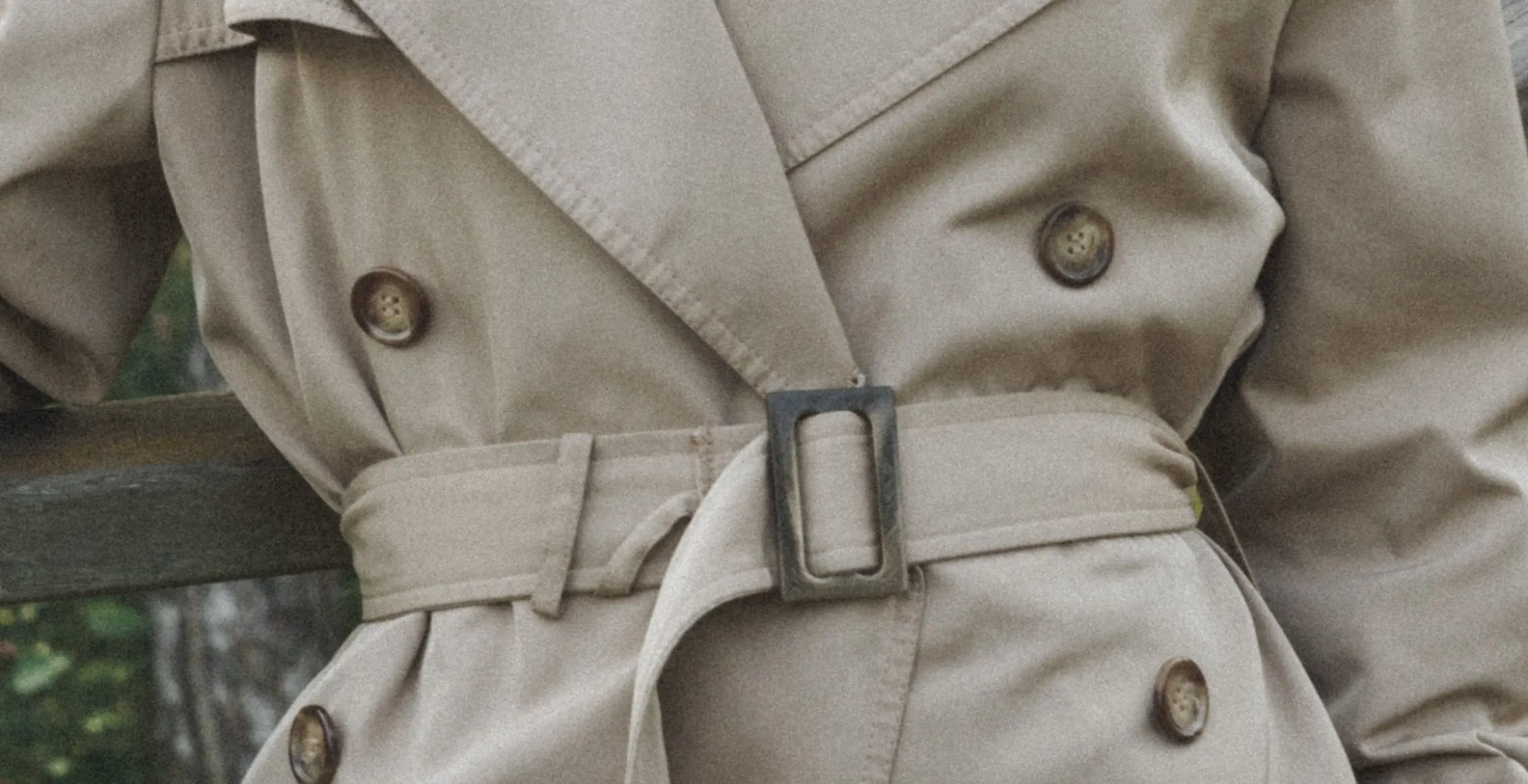
A coat does more than keep you warm. Its hem creates a major horizontal line across the body.
A coat ending at the hip creates a different break from one ending at the knee. A long coat can create a continuous column, while a shorter coat exposes more of the lower body and creates a stronger transition between upper and lower sections.
The same applies to skirts.
A maxi skirt creates a long uninterrupted line. A midi skirt introduces a break around the lower leg. The relationship between the hem and the shoe then becomes part of the composition.
This is why changing the length of a garment can completely transform an outfit even when every other piece stays the same.
7. How Does Layering Change Proportion?
Layering creates proportion through addition.
A long shirt underneath a cropped jacket introduces two different lengths. A long coat over wide trousers creates depth and volume. A short cardigan over a flowing skirt creates another division.
For modest dressers, layering is particularly powerful because coverage naturally creates more opportunities to manipulate length.
More coverage does not mean fewer possibilities.
It can mean more proportions to work with.
For another Rópard guide to building a wardrobe around versatile silhouettes, see The Effortless Elegance of a Modest Capsule Wardrobe.
What Is a Break Point in an Outfit?
A break point is any place where the eye encounters a visual division. It could be the waistband of trousers, the hem of a blazer, the end of a coat, the edge of a skirt, or the point where shoes meet trousers.
Too many break points can make an outfit feel fragmented. Too few can create a powerful uninterrupted silhouette. This is why an outfit consisting of a long coat, long skirt, and long scarf can feel dramatically different from a cropped jacket, mid length skirt, and ankle boots.
The clothes have created a completely different map of the body.
How Do You Create Better Outfit Proportions?
The easiest approach is to stop trying to make every part equal.
Fashion often becomes more interesting when the divisions are unequal.
One third on top and two thirds below can create a different visual rhythm from one half above and one half below. The same principle appears throughout fashion design, although it should never be treated as a universal formula.
Try a compact jacket with wide trousers. Try a long coat over a narrow base. Try a full skirt with a precise top. Try an oversized blazer with a streamlined lower half.
The goal is not perfect symmetry. The goal is intentional contrast.
Even accessories can participate. A tiny bag against a voluminous outfit can emphasize the scale of the clothing, while a larger bag can add visual weight to a sleek silhouette.
Why Are Playful Proportions Back in Fashion in 2026?
The return of playful proportions is one of the clearest signs that fashion is becoming interested in silhouette as an idea again.
The Fall Winter 2026 collections are experimenting with dropped waists, exaggerated volume, peplums, dramatic skirts, cropped outerwear, and deliberately unusual relationships between garments. British Vogue described the season directly through the language of “playful proportions.”
The important point is not simply that these shapes are trending. It is that designers are manipulating the familiar architecture of clothing.
Chanel’s Fall Winter 2026 collection, for example, used dropped waists and other changes in silhouette to create impact through relatively subtle shifts in proportion.
Fashion history shows that this is not new. A Chanel evening dress from 1924 to 1926 at The Metropolitan Museum of Art also know as
The Met, uses beaded lines to define the bust, dropped waist, and dropped hipline. The Met describes Chanel’s work of this period as part of the modern movement toward comfort, function, and simplicity.
The silhouette had changed because the waist had moved. That is proportion at its most powerful.
What Does Proportion in Fashion Design Teach Us About Fashion History?
Fashion history is essentially a history of changing proportions.
The 1920s moved the waist downward and created a straighter, more tubular relationship between the body and clothing. The Met’s collection includes several examples of the dropped waist and raised hemline that defined the period.
Lanvin approached the same period differently. Her robe de style used a dropped waist but paired it with wide skirts inspired by eighteenth century court dress. Then fashion changed again.
The significance of proportion becomes obvious when comparing these silhouettes. Fashion did not simply change hemlines or fabrics. It changed where the body appeared to begin and end.
That is why proportion in clothing design is so important.
Designers are constantly deciding how much space belongs to the torso, how much belongs to the legs, where the waist sits, how wide the shoulders appear, how much volume surrounds the body, and where the eye should stop.
Why Does Proportion Matter So Much in Modest Fashion?
Modest fashion has an unusually rich relationship with proportion because longer lengths and layered silhouettes give designers more visual territory.
A long dress can become architectural through a cropped jacket. A wide leg trouser can create drama beneath a fitted coat. A long tunic can be balanced by a narrower lower half. A full skirt can become more modern when paired with a structured outer layer.
This is where modest dressing becomes particularly interesting. Coverage is not the absence of styling possibilities. It is a design parameter. The strongest modest outfits do not simply add fabric. They manipulate fabric.
They consider where the hem ends, where the waist sits, how much volume surrounds the body, how layers interact, and how the silhouette moves when the wearer walks.
For a broader look at how modern modest wardrobes are evolving toward structure, fluid tailoring, and intentional silhouettes, see Rópard’s The New Era of Modest Fashion.
Frequently Asked Questions about Body Proportion in Fashion
1. What is proportion in fashion?
Proportion in fashion is the relationship between different parts of an outfit, including length, width, volume, scale, and placement. It considers how clothing relates to the body and how individual garments relate to one another.
2. What is the difference between proportion and fit?
Fit describes how well a garment accommodates the body. Proportion describes the relationship between the garment, the body, and other parts of the outfit. A garment can fit perfectly while still creating an unexpected or unbalanced proportion.
3. What are examples of proportion in fashion design?
Examples include a cropped jacket with wide leg trousers, a long coat over a narrow silhouette, a dropped waist with a full skirt, an oversized blazer with a fitted lower half, and a high waist paired with a shorter top.
4. How can I improve my outfit proportions?
Start by looking at the major lines in your outfit. Notice the waist placement, jacket length, trouser width, skirt length, coat length, and volume. Then introduce contrast between at least two elements rather than making every garment the same scale.
5. Does proportion depend on body shape?
Body proportions influence how clothing is perceived, but there is no single correct proportion for a particular body. Proportion should be treated as a styling tool rather than a system for correcting bodies. The same person can intentionally create several different silhouettes by changing waist placement, length, volume, and layering.
READ THE PREVIOUS POSTS

Spring Summer 2027: Why Fashion Is Embracing Bold Shapes and Expressive Style
From sculptural skirts and balloon trousers to expressive color and visible craftsmanship, explore ten Spring/Summer 2027 runway ideas and learn how to make them work for modest style.

The Scarf Belt Is Fashion’s Softest Way to Create Shape
The triangle scarf is having a major moment for Fall 2026. From oversized coats to polished tailoring, here’s why this small accessory is becoming the season’s must have finishing touch.

The Frog Button Is Fashion’s New Punctuation
The triangle scarf is having a major moment for Fall 2026. From oversized coats to polished tailoring, here’s why this small accessory is becoming the season’s must have finishing touch.




#Comments (7)
Modest Fashion Explained: The Ultimate Guide to Style, Elegance & Modern Dressing in 2026
[…] dressing becomes much more interesting when you play with proportions. Pair a voluminous skirt with a more structured top, balance wide-leg trousers with a streamlined […]
East West Bag: 7 Stunning Facts You Need to Know
[…] is exactly why proportion matters so much in fashion. As we explored in Rópard’s guide to Why Proportion Is the Secret Behind a Great Outfit, clothing is not simply a collection of individual pieces. Length, width, volume and scale […]
Triangle Scarf: 4 Powerful Ways to Style Fall 2026
[…] draws attention toward the face and adds a controlled point of texture without swallowing the proportions of the […]
Leather Jackets: 7 Powerful Trends for 2026
[…] dressers in particular. A leather jacket can create definition through texture, structure and proportion without relying on a short hemline or exposed skin to make an outfit visually interesting. The […]
Personal Style: 7 Powerful Truths About Developing Your Own Taste
[…] explored one part of this in “Why Proportion Is the Secret Behind a Great Outfit.” Proportion is one of the clearest examples of why copying an outfit is not the same as […]
Silk vs Satin: 6 Brilliant Differences That Actually Matter
[…] is the same principle behind Rópard’s argument in Why Proportion Is the Secret Behind a Great Outfit: every element of a garment has to work in relation to the […]
Scarf Belt 2026: 5 Stunning Ways to Add Shape and Movement
[…] connects directly to the principle explored in Why Proportion Is the Secret Behind a Great Outfit, where the relationship between volume, length, and visual weight matters more than simply […]