- The Arts of Craftsmanship, The Styling Atelier
- September 8, 2026
- 4
The Cut of a Coat Matters More Than the Trend
The most stylish coat in your wardrobe may not be the trendiest one. It may simply be the one that gets the coat fit right.
For the modest dresser, this matters even more. When a coat covers most of the outfit underneath it, the coat becomes the outfit. Its shoulder, sleeve, length, volume, and the way its fabric falls can determine whether everything underneath looks considered or slightly off.
A good coat is one of the hardest working pieces in a fall and winter wardrobe. It sits over dresses, knitwear, tailoring, and layers. It comes to work, to dinner, on weekends, and on days when very little thought went into what is underneath it. Unlike a blouse or a pair of trousers, it is also one of the first things people see.
Yet when we shop for one, we often ask the wrong question.
Is this coat on trend? A more useful question is whether the coat is well cut. Because trends change quickly. How a coat fit does not. A strong silhouette, balanced proportions, and thoughtful construction can make a coat feel relevant long after the trend that inspired it has disappeared.
Why the Cut Matters More Than the Trend
A coat has a difficult job. It needs to feel current without becoming so tied to a particular moment that it becomes difficult to wear a few seasons later. That tension is precisely why its cut matters.
A well cut coat can make a simple outfit look deliberate. A poorly proportioned coat can make an otherwise beautiful outfit feel awkward. This has little to do with whether the silhouette is fitted, oversized, straight, or boxy. Any of these shapes can work. What matters is whether the volume has been deliberately controlled.
The distinction can be seen clearly in the work of Cristóbal Balenciaga. The Metropolitan Museum of Art describes one of his 1964 coats as having a boxy silhouette designed to stand away from the body while remaining shaped through carefully positioned seams and darts. The coat does not follow the body closely, but neither does it simply hang without structure. Its volume is engineered.
That distinction is worth remembering. Effective tailoring does not inherently reduce a garment’s size; rather, it ensures the shape is intentional.
For a modest wardrobe, this opens up far more possibilities than the traditional idea of tailoring might suggest. Definition does not require a garment to reveal the figure. A strong shoulder, a clean sleeve, a controlled waist, or a beautifully proportioned hem can create structure while maintaining coverage.
The point is not to make the body smaller. it is to ensure the silhouette appears coherent.
What Makes a Good Coat?
Four elements matter most when assessing a coat: fabric, cut, fit, and construction.
None of them operates independently.
A beautiful cut made from flimsy fabric will not have the same presence as the same design made from a substantial cloth. Excellent fabric cannot rescue weak construction. A strong shoulder can still look wrong if the sleeve and body have not been proportioned around it.
The strongest coats are successful because these elements reinforce one another.
Fabric Gives the Coat Its Character
Before you notice the buttons, collar, or silhouette, you notice how the fabric behaves. Its weight, texture, surface, drape, and ability to hold a shape all influence how a coat looks on the body. The same pattern can produce an entirely different result depending on the material. A firm wool can create a more architectural silhouette, while a softer fabric may fall closer to the body and feel more fluid.
For winter outerwear, wool remains particularly useful because of its insulating and moisture managing properties. The Woolmark Company explains that wool’s natural crimp creates pockets of still air that help insulate the wearer, while its ability to absorb and release moisture contributes to breathability and temperature regulation. Its natural elasticity and recovery also help it retain its shape, making it well suited to garments designed for repeated wear.
These qualities make wool particularly effective in tailoring. It can support a defined shoulder, clean lapel, or structured silhouette without appearing rigid. But “100 percent wool” should never be treated as a guarantee of quality. Fiber composition tells you what a coat is made from, not how well the material has been woven, finished, or constructed. Two coats can both be labeled 100 percent wool and look, feel, and perform completely differently. The fiber matters, but the way that fiber becomes fabric, and the way that fabric becomes a coat, matters just as much.
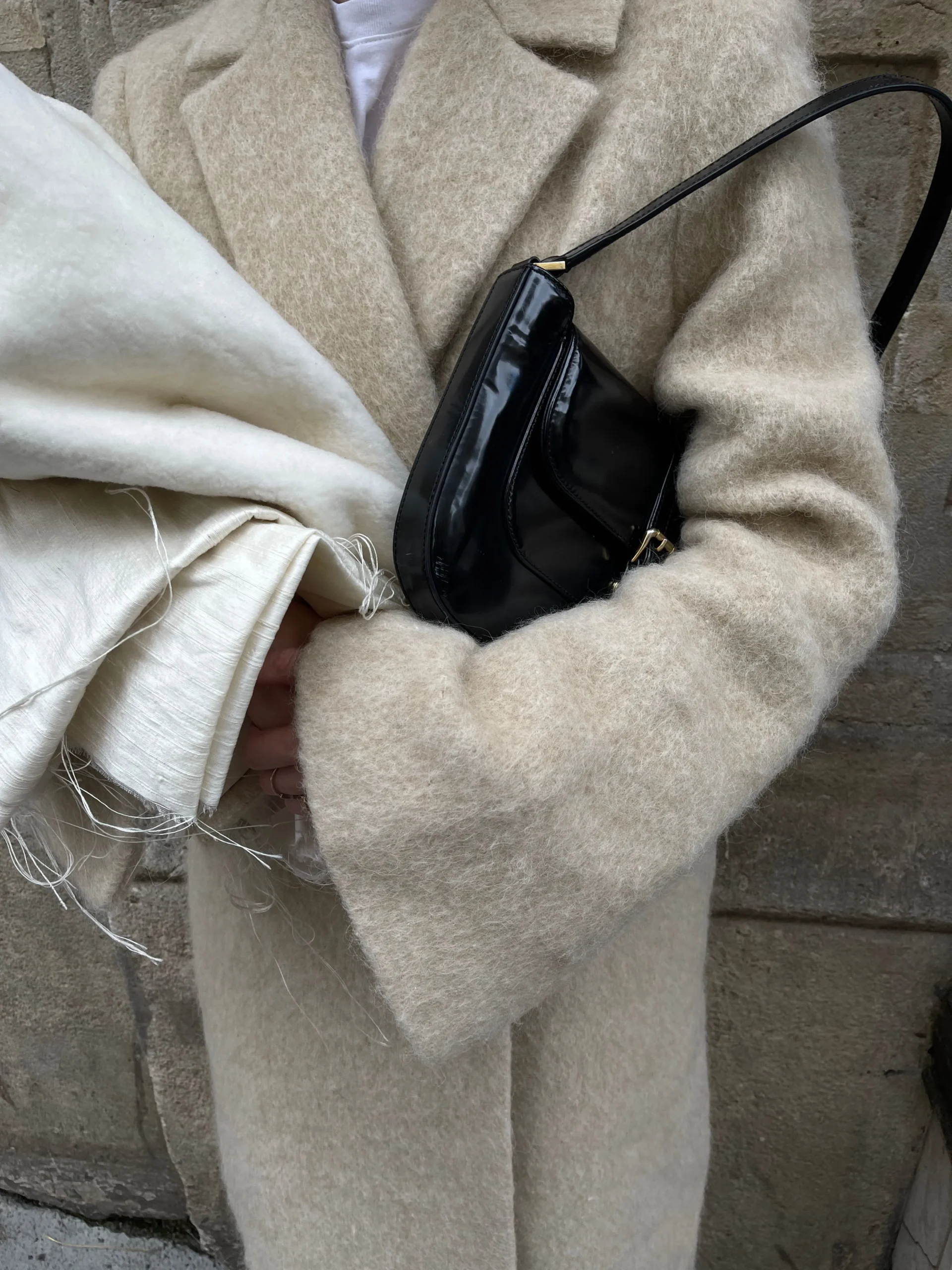
Cashmere is another fabric frequently used in luxury coats, prized for its exceptionally fine fibers, softness, lightness, and insulating properties. It comes from the soft undercoat of cashmere goats, which develop this protective layer in response to the extreme climates of Central and East Asia. Mongolia and China remain important sources of raw cashmere. As we explored in our guide to luxury natural fabrics, part of cashmere’s appeal lies in its unusual combination of warmth and lightness. Its fine fibers give a coat a soft, fluid hand without the weight of some heavier wool fabrics.
That makes cashmere particularly effective in coat design. The material itself brings refinement through its texture, softness, and drape, meaning it does not need excessive embellishment to communicate luxury. But beautiful fiber cannot rescue a poorly proportioned silhouette. The quality of the material still depends on how it is translated into the garment.
For an investment coat, then, the question is not simply whether the label says cashmere. Consider whether the coat has enough structure to hold its shape, whether the cut allows the fabric to fall naturally, and whether the proportions feel balanced. Luxury is not created by fiber alone. It emerges when material, cut, and construction work together.
Cotton may not have the same luxury reputation as cashmere or fine wool, but its role in outerwear is far more important than its price point might suggest. Naturally breathable and durable, cotton can give a coat a more understated, grounded character. Its versatility also makes it particularly useful for lighter outerwear, transitional coats, and densely woven fabrics that offer structure without feeling excessively formal.
In coat design, cotton is often at its best when its natural qualities are supported by the right construction. A tightly woven cotton can create a clean surface and a more defined silhouette, while heavier cotton fabrics can provide substance and durability. The result is a coat that feels practical without necessarily looking utilitarian.
Viscose and Rayon: Draping With Purpose
Viscose, also known as rayon, brings a different set of qualities to outerwear. Made from regenerated cellulose, it is valued for its softness, fluidity, and ability to create a smooth drape. Rather than providing the inherent structure associated with a substantial wool fabric, viscose can help a garment move more naturally and give the surface a softer, more fluid appearance.
That makes it particularly useful when a coat is designed to feel relaxed rather than rigid. Viscose can also be used in linings, where its smooth surface helps the garment move comfortably over clothing. Its presence in a coat, however, should be considered in relation to the rest of the fabric composition. A material that contributes softness and drape does not necessarily provide the same structural qualities as wool, so the overall design and construction remain essential.
The Best Coats Often Come From a Combination of Fabrics
This is where fabric composition becomes more interesting. A coat does not necessarily become better because it is made from one prestigious natural fiber. In many cases, the combination of fabrics is what gives a coat its balance.
Wool can provide warmth, resilience, and structure. Cashmere can introduce softness and lightness. Cotton can contribute durability and a more substantial hand, while viscose can bring fluidity and softness. When these materials are combined thoughtfully, their different characteristics can complement one another rather than compete.
This is why reading a coat’s fiber composition can tell you more than simply looking for words such as cashmere or wool. A fabric blend is not automatically a compromise, just as a coat made from a single luxury fiber is not automatically superior. What matters is why those materials have been combined and how the resulting fabric performs within the design.
Ultimately, the quality of a coat comes from the relationship between fabric, cut, construction, and function. The right material supports the silhouette. The right cut allows the material to behave as intended. And the right construction turns those qualities into a garment that can withstand repeated wear while continuing to look considered. That is why the most successful coat is rarely the one with the most impressive fabric label. It is the one in which every element is working toward the same silhouette.
If you want to understand why certain materials feel more luxurious than others, our guide to luxury natural fabrics explores the characteristics that make fibers such as cashmere, wool, silk, and cotton so valuable in fashion.
The Cut Creates the Silhouette
If fabric gives a coat its character, the cut gives it its identity.
The cut determines where the shoulder sits, how much space exists through the body, how the sleeve falls, how the collar frames the face, and where the hem lands. These decisions ultimately create the silhouette that everyone sees.
This becomes particularly important with outerwear because a coat can conceal almost everything underneath it.
Imagine the same cream knit dress beneath three different coats. A long, straight wool coat creates one impression. A softly belted coat creates another. A dramatically oversized coat creates something else entirely.
The dress has not changed. The coat has.
That is why one beautifully proportioned coat can often be more useful than several coats purchased simply because each represents a different seasonal trend.
A strong silhouette can adapt as the rest of fashion changes. The same coat can work with wide trousers one year and a narrower skirt another. It can be worn with loafers, boots, or trainers. Its usefulness comes from the fact that its design is not dependent on a single styling formula.
Start With the Shoulder
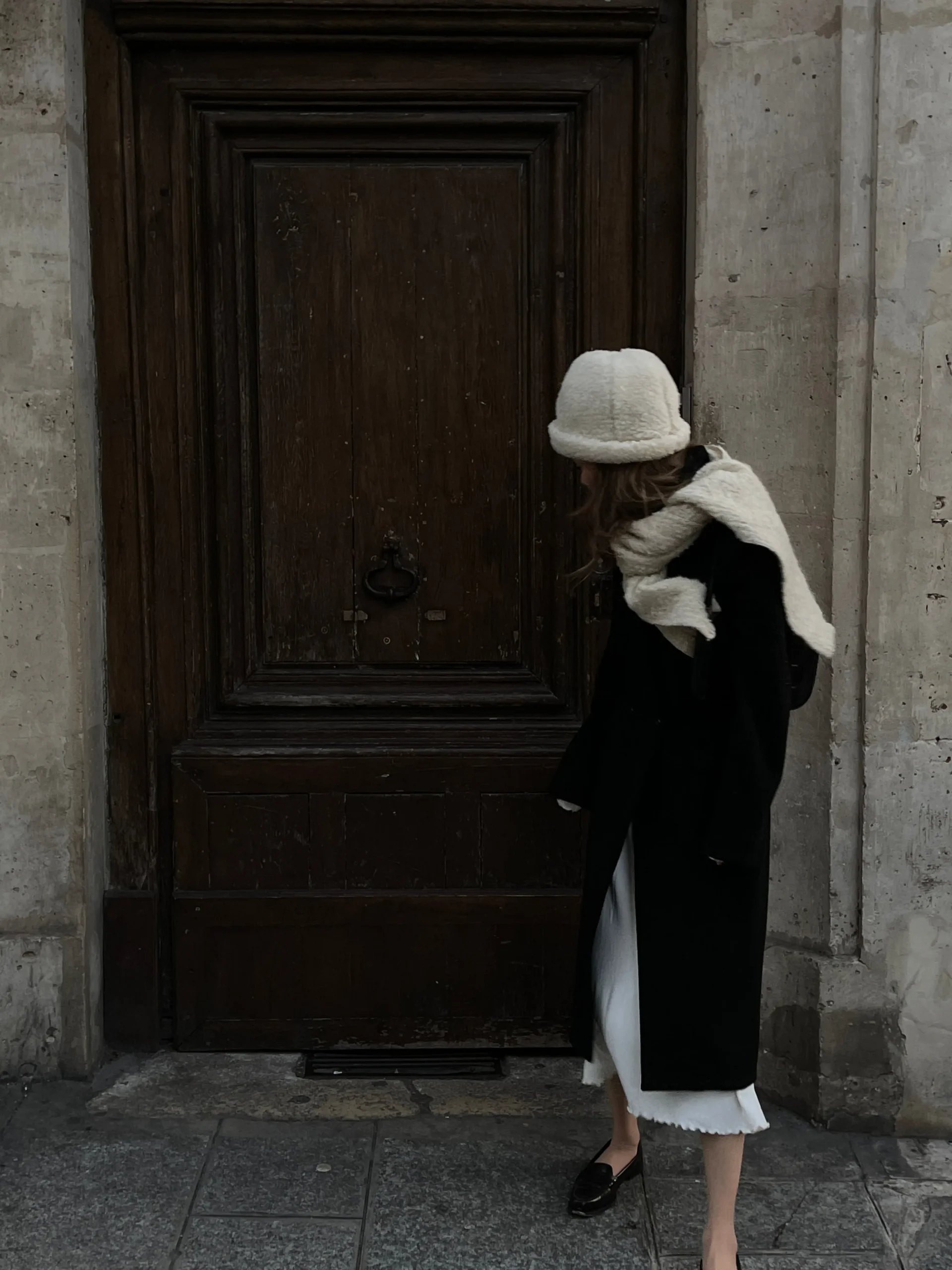
If you are standing in a fitting room trying to decide whether a coat is worth buying, start at the shoulder. The shoulder creates the framework for everything beneath it.
A structured shoulder can give a coat authority and polish. A softer shoulder can make it feel relaxed and fluid. Neither is inherently better. What matters is whether the shoulder looks intentional and connects naturally with the sleeve and body.
This is one reason tailoring is so closely connected to silhouette.
The Metropolitan Museum of Art’s collection provides countless examples of designers using construction to manipulate visual proportion. Charles James, for example, used seam placement and tailoring techniques to create an emphatic hourglass silhouette in a wool ensemble from the early 1950s.
The lesson is not that every coat should be sculpted around the body. It is that construction is what turns fabric into shape. A coat should not simply hang from your shoulders. A coat should not merely drape from the shoulders; it should convey a perspective.
This relationship between construction and silhouette is not unique to coats. Fashion houses have long used distinctive cuts, materials, and construction techniques to establish recognizable design languages, as we explore in What Is a Fashion House?
Fit and Silhouette Are Not the Same Thing
This distinction is particularly important when shopping for outerwear.
Fit describes how a garment sits on the body. Silhouette describes the overall shape that garment creates.
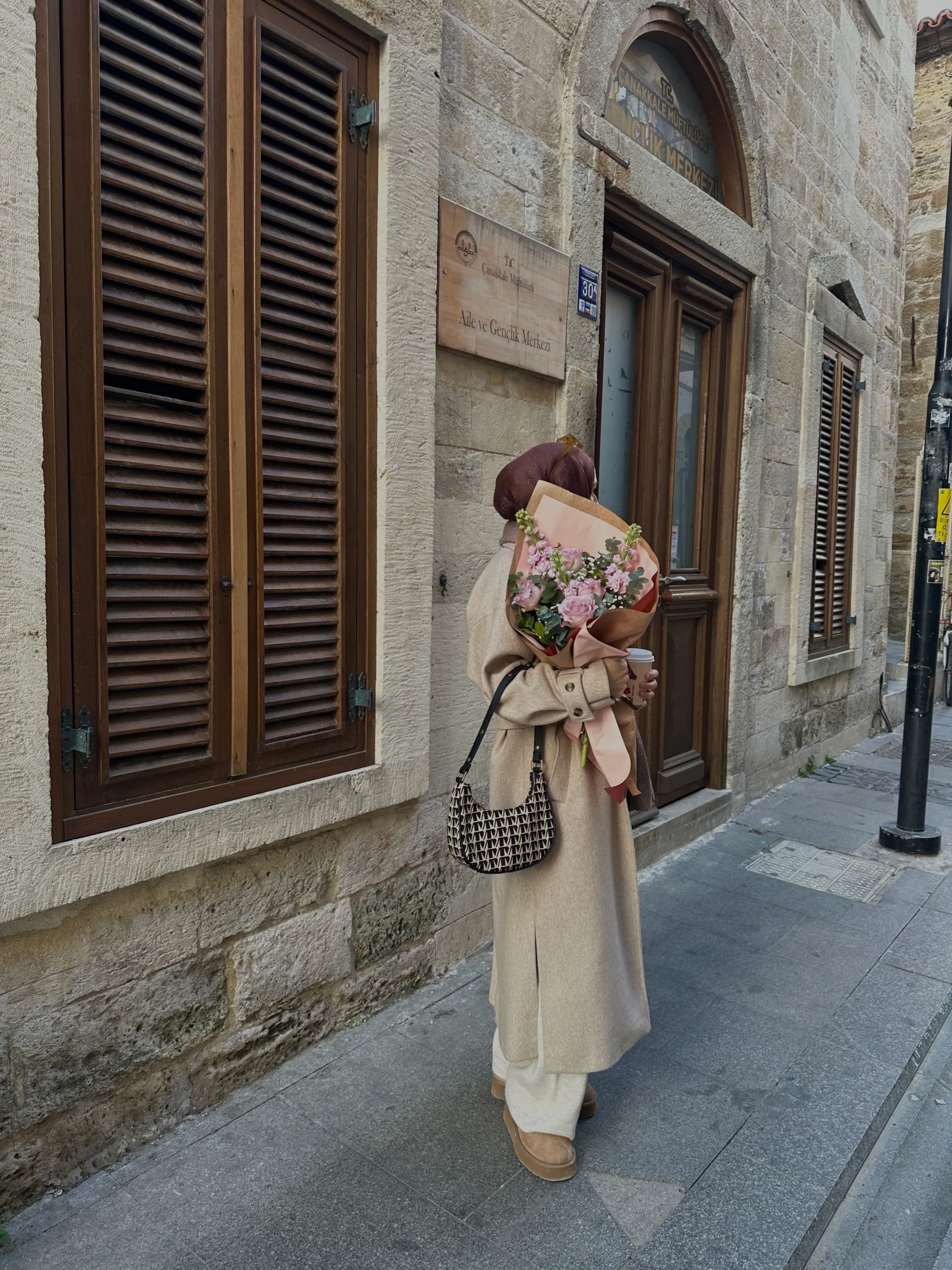
A coat can be oversized and still fit correctly.
This is where oversized outerwear is sometimes misunderstood. The presence of extra fabric does not mean that fit becomes irrelevant. In fact, the more volume a coat has, the more important proportion becomes.
The shoulder still needs to make sense. The sleeve needs to begin where the design intends it to. The collar needs to sit correctly. The body needs enough room for layering without appearing accidental.
For modest dressers, this is especially relevant because winter dressing often involves several layers. A coat should accommodate the sweater, blouse, knit dress, or tailoring you actually wear without pulling across the back or restricting the arms.
But extra room should not become visual confusion. The best oversized coats still have proportion.
Why Classic Coat Silhouettes Survive Fashion Cycles
There is a reason certain coats keep returning.
The double breasted coat, long tailored overcoat, Balmacaan, pea coat, and duffle coat have accumulated decades of fashion history. Their proportions have changed, their fabrics have evolved, and designers have repeatedly reinterpreted their details, but their identities remain recognizable.
That longevity is not accidental.
Many of these garments began as solutions to practical problems. Warmth, protection, movement, layering, and durability shaped their designs before fashion gave them their cultural significance.
The Woolmark Company’s historical material on winter coats, for example, traces styles such as the duffle coat and pea coat through military and naval use before their adoption into everyday dress.
Their original functionality gave these garments a visual logic that could survive changes in taste.
That is worth remembering when a coat is marketed as an “investment piece.” Price alone does not make something an investment. An investment piece is a garment you can realistically imagine wearing again and again.
A classic coat does not have to be conservative or boring. It can have an unusual collar, an interesting sleeve, an unexpected fabric, or a distinctive proportion. What gives it longevity is that the fundamental silhouette is not entirely dependent on a trend with a short lifespan.
A well chosen coat also makes sense within a larger approach to dressing. In our guide to the modest capsule wardrobe, we explore why fewer, better considered pieces can create a wardrobe that feels more versatile and enduring.
Construction Is the Detail You Notice Later
The inside of a coat can tell you things the outside cannot.
Look at the lining. Does it sit smoothly? Does it move easily over the clothes underneath? Is it neatly attached? Look at the seams. Are they clean and consistent? Look at the buttons. Are they securely attached? Do they feel substantial? Look at the hem. Does it hang evenly?
None of these details is particularly glamorous. Together, however, they determine how a coat behaves after months and years of wear.
The Fashion Institute of Technology treats the construction of topcoats and overcoats as an advanced tailoring discipline involving fabric cutting, assembly, construction processes, and finishing. Construction is therefore not an afterthought added once the design is complete. It is part of how the garment becomes what it is.
This is also why obsessing over fibre composition while ignoring construction can be misleading.
A beautiful fibre label cannot tell you how well a garment has been made. Sometimes the most revealing part of a coat is the part nobody sees. Turn it inside out, that’s the trick.
A Beautiful Coat Still Has to Work
The most successful coats balance appearance with function.
Length matters because it affects coverage. Pockets matter because your hands and everyday essentials need somewhere to go. A collar that can close around the neck becomes considerably more useful once the temperature drops.
The outer fabric matters too. Wool can provide natural insulation, while tightly constructed fabrics and modern textile treatments can improve resistance to wind and moisture. Woolmark research on wool outer layers highlights insulation, breathability, and resistance to the elements as important performance characteristics.
This is where fashion history becomes particularly useful.
Many of the coat silhouettes we now describe as classics were not originally created simply because someone thought they looked elegant. They emerged from practical requirements and were later absorbed into fashion.
The aesthetic survived because the function made sense. That is a useful standard for modern shopping. A coat should look good but it should also work.
How to Choose a Coat You Will Still Love in Five Years
Stand in front of a mirror and examine the shoulders. Do they look deliberate? Move your arms. Can you comfortably wear the layers you would normally wear throughout winter?
Look at the side view. Does the coat fall cleanly, or does the fabric pull and bunch? Look at the back. Does the silhouette still look considered when you are not facing the mirror? Pay attention to the fabric. Does it have enough substance for the way you intend to wear it? Then look inside. Is the construction clean?
Finally, place the coat back into the context of your wardrobe.
Can you wear it over your dresses? Your knitwear? Your wider trousers? Your everyday shoes? Your more polished outfits? If the answer is yes, you may have found something more valuable than a coat that happens to be fashionable this season. You may have found one that will remain useful.
The Best Coat Makes Everything Else Look Better
Fashion will always give us another coat to want.
A new proportion. A new collar. A new hemline. Another interpretation of oversized tailoring. That is part of the pleasure of fashion.
But when you are spending serious money on outerwear, the smarter approach is to let the trend influence the details rather than dictate the entire silhouette.
Pay attention to the fabric, to the proportion, to the shoulder. Leave enough room for the layers you actually wear. Look at the construction.
Because the real luxury of a coat is not that everyone can immediately identify which season it came from. It is that you can put it on five years from now and still think: This looks exactly right.
Frequently Asked Questions about coats
1. What type of coat is best for winter?
There is no single best winter coat for everyone. The right choice depends on temperature, precipitation, activity level, and how much layering you need. For a classic everyday wardrobe, a well constructed wool coat offers warmth, breathability, and natural temperature regulation. Wool’s natural crimp traps pockets of air, helping insulate the body, while its ability to manage moisture vapor makes it more breathable than many synthetic fibers.
For particularly cold or wet conditions, an insulated coat can be more appropriate. Down offers a high warmth to weight ratio, while synthetic insulation continues to provide warmth when damp. The best winter coat, therefore, is not necessarily the thickest or most expensive one. It is the coat whose fabric, insulation, construction, and fit suit the conditions in which you will actually wear it.
2. What is the warmest type of winter coat?
For maximum warmth, an insulated coat with down or synthetic fill is generally more effective than an uninsulated fashion coat because the insulation is specifically designed to trap warm air. Down is particularly efficient for its weight, but it loses insulating performance when wet and takes longer to dry. Synthetic insulation performs better in damp conditions and dries more quickly.
That does not make a wool coat unsuitable for winter. Wool naturally insulates through its crimped fibers, which trap pockets of still air, while also managing moisture and temperature. For everyday city dressing, the question is therefore less about finding the single “warmest” material and more about matching the coat to your climate, activity, and layering needs.
3. How do you choose a winter coat?
Start with function before trend. Consider the climate, how often you will wear the coat, what you will layer underneath it, and whether you need protection from rain or snow. Then examine the fabric, construction, silhouette, length, closure, lining, pockets, and shoulder structure.
For an everyday investment coat, look for a fabric with enough substance to hold its shape, a silhouette that accommodates your clothing without looking oversized by accident, and construction that feels intentional rather than decorative. Wool is particularly useful for this kind of coat because it combines insulation, breathability, elasticity, and durability.
Most importantly, try the coat on with the clothes you realistically expect to wear underneath it. A coat that fits beautifully over a thin shirt but pulls across the shoulders when worn over a sweater is not a successful winter coat. The best coat is the one that works with your wardrobe, not simply the one that looks impressive on the hanger.
4. How should a winter coat fit?
A winter coat should give you enough room to move and layer without looking shapeless. The shoulders are particularly important: they should sit in the intended position rather than pulling backward, collapsing, or extending far beyond the shoulder unless the oversized silhouette is deliberately designed that way. The sleeves should provide sufficient coverage without becoming excessively long, and the coat should close comfortably without pulling across the chest or abdomen.
Length also changes the way a coat looks and functions. A longer coat can provide greater coverage and create a more elongated silhouette, while a shorter coat can feel lighter and easier to move in. What matters is proportion. The relationship between the shoulders, body, sleeves, hem, and the clothing underneath determines whether the coat looks elegant or simply oversized.
This is why the way acoat fits is ultimately more important than following a seasonal silhouette. The Metropolitan Museum of Art’s archive provides a useful historical reminder: Balenciaga’s coats were often built around unusual volumes, but their shapes were carefully engineered through tailoring, seam placement, and shaping. The silhouette was the result of construction, not simply excess fabric.
5. How long should a winter coat last?
A good winter coat should be considered a long term wardrobe piece rather than a seasonal purchase, particularly when it is made from durable materials and properly maintained. There is no universal number of years because longevity depends on the fabric, construction, frequency of wear, climate, storage, and care.
Wool is particularly well suited to long term wear. Its natural elasticity helps fabrics recover their shape, while its resistance to wrinkles, odors, and stains can reduce the need for frequent washing. Research cited by The Woolmark Company found that the average lifetime of wool garments was more than 50% longer than that of cotton garments in a global wardrobe audit.
Care matters just as much as the original quality. Woolmark recommends appropriate hangers for woven wool garments, airing between wears, brushing away surface dirt, and allowing wool garments to rest so the fibers can recover their shape.
For that reason, I would not judge a coat’s value only by its price. A well cut coat in a durable fabric that you can wear for years is often a more meaningful investment than a trend driven coat that looks dated after one season.
READ THE PREVIOUS POSTS

Spring Summer 2027: Why Fashion Is Embracing Bold Shapes and Expressive Style
From sculptural skirts and balloon trousers to expressive color and visible craftsmanship, explore ten Spring/Summer 2027 runway ideas and learn how to make them work for modest style.

The Scarf Belt Is Fashion’s Softest Way to Create Shape
The triangle scarf is having a major moment for Fall 2026. From oversized coats to polished tailoring, here’s why this small accessory is becoming the season’s must have finishing touch.

The Frog Button Is Fashion’s New Punctuation
The triangle scarf is having a major moment for Fall 2026. From oversized coats to polished tailoring, here’s why this small accessory is becoming the season’s must have finishing touch.




#Comments (4)
Lace and Satin Fashion Trends: 7 Powerful Reasons They’re Back
[…] connects directly to Rópard’s earlier analysis, Why the Way a Coat Is Cut Matters More Than the Trend Itself. A trend tells you what is visible. Construction explains why the garment […]
Leather Jackets: 7 Powerful Trends for 2026
[…] That matters for modest dressers in particular. A leather jacket can create definition through texture, structure and proportion without relying on a short hemline or exposed skin to make an outfit visually […]
Frog Buttons: 5 Brilliant Reasons This Detail Is Back
[…] while the closures provide the identity. This connects directly to the Rópard idea explored in The Cut of a Coat Matters More Than the Trend. A garment is not interesting because it contains the correct trend vocabulary. It is interesting […]
Spring Summer 2027 Fashion Trends: 10 Bold Modest Looks
[…] is also a good moment to think about proportion more closely. Our guide to the cut of a coat and why it matters explores the same principle: a silhouette succeeds when its volume is carefully […]