Lace and satin fashion trends for modest fashion in 2026

Lace and Satin Fashion Trends: Why Romance Is Back in 2026
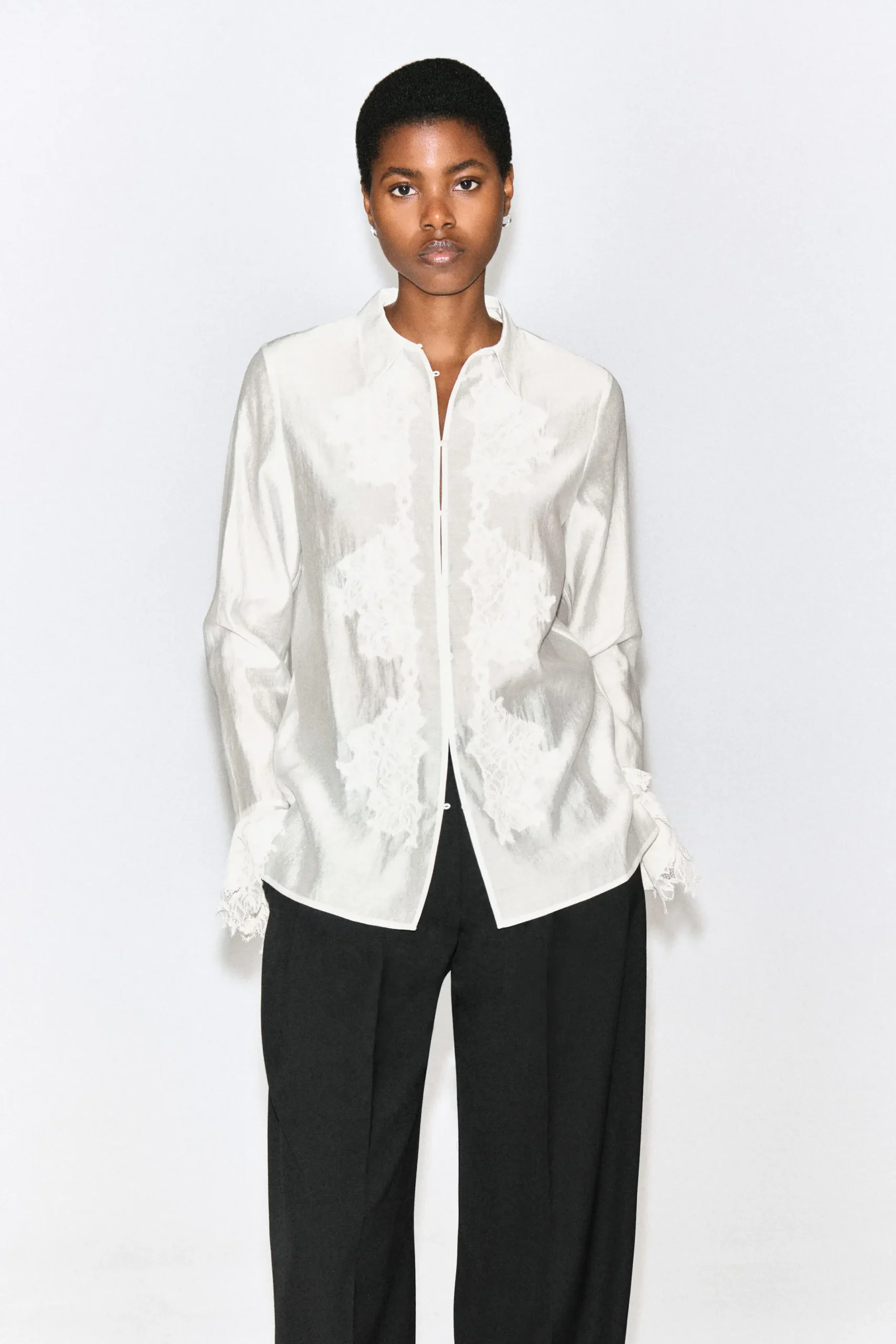
There is a particular kind of fashion lover who notices the fabric before the outfit, the drape before the trend, and the construction before the styling trick. If you are the woman who wants to know why a look feels current, not just what is currently popular, this one is for you.

Lace and satin fashion trends are having another moment, but calling this a simple comeback misses what is actually happening. Across the Fall 2026 runways, lace has moved from delicate trim to a defining material, appearing across dresses, skirts and separates. Satin has followed a different route, moving from the slip dress into skirts, tailoring, shoes, outerwear and daytime dressing.

The more interesting story is not that these fabrics are back. It is why fashion keeps returning to them.

The answer has less to do with fabric trends than with fashion’s changing relationship with femininity, romance and ornament.

Lace and Satin Fashion Trends Are Part of a Bigger Shift

Lace and satin make sense together because they belong to the same cultural mood, even though they behave very differently as fabrics.

Lace is intricate, open and decorative. Satin is smooth, reflective and fluid. One creates visual complexity through pattern and transparency, while the other creates it through light and movement. Yet both have long been associated with romance, eveningwear, lingerie, luxury and femininity.

That association is becoming important again.

The Fall 2026 fashion season is moving noticeably toward richer surfaces and more expressive dressing. Vogue’s Fall 2026 reporting points to romantic fabrics, sheer materials, lingerie inspired pieces, ornamentation and expressive silhouettes, with lace emerging as one of the season’s defining directions.

This is not a return to one fixed idea of femininity. It is a return to the possibility of femininity being visible in clothing again.

For several seasons, fashion was heavily invested in restraint. Clean lines, quiet luxury, neutral wardrobes and minimal styling dominated the conversation. Lace and satin are almost impossible to make completely anonymous. They catch the light. They reveal texture. They move differently. They carry historical associations.

Why Is Lace Back in Fashion?

Lace has been returning gradually rather than appearing overnight.

Vogue’s Fall/Winter 2026 trend research cites Heuritech data predicting increased visibility for lace across social media between Fall/Winter 2025 and Fall/Winter 2026. Fine lace visibility is projected to rise by 42 percent, lace detail tops by 107 percent, lace skirts by 33 percent and fine lace dresses by 54 percent. EDITED data cited by Vogue also showed lace in store arrivals rising 22 percent for Fall/Winter 2025.

The runway confirms the direction. Saint Laurent has used lace through a darker, more provocative lens, while Khaite has approached it with softness. Other designers have used lace as a surface treatment, a full garment, a sheer layer or a contrast against heavier materials.

That variety matters. The lace revival is not about making everything look delicate. Some of the most interesting versions use lace against something harder: leather, tailoring, structured outerwear, darker colours or exaggerated silhouettes.

The tension is what makes the material feel contemporary.

Lace as Craftsmanship and Heritage

Lace also carries a history that gives it more weight than a simple decorative trend. The Metropolitan Museum of Art’s historical research shows that European lace was once extraordinarily expensive and associated with status, craftsmanship and social distinction. Handmade lace could require enormous amounts of time and skill, with production concentrated in specialist centres across Europe.

That history gives lace a useful quality in contemporary fashion. It can look romantic, but it can also signal craftsmanship, wealth, labour and heritage. That is why the current lace revival feels larger than a pretty detail.

Why Does Satin Keep Coming Back?

Satin’s story is slightly different.

Its current resurgence can be traced through the return of the slip dress and slip skirt, particularly through the influence of 1990s fashion. Who What Wear identified the satin slip dress and skirt as major pieces in 2025, connecting their return to a broader movement away from the hyper minimalism that had dominated fashion.

By Spring/Summer 2026, the material had become even more flexible.

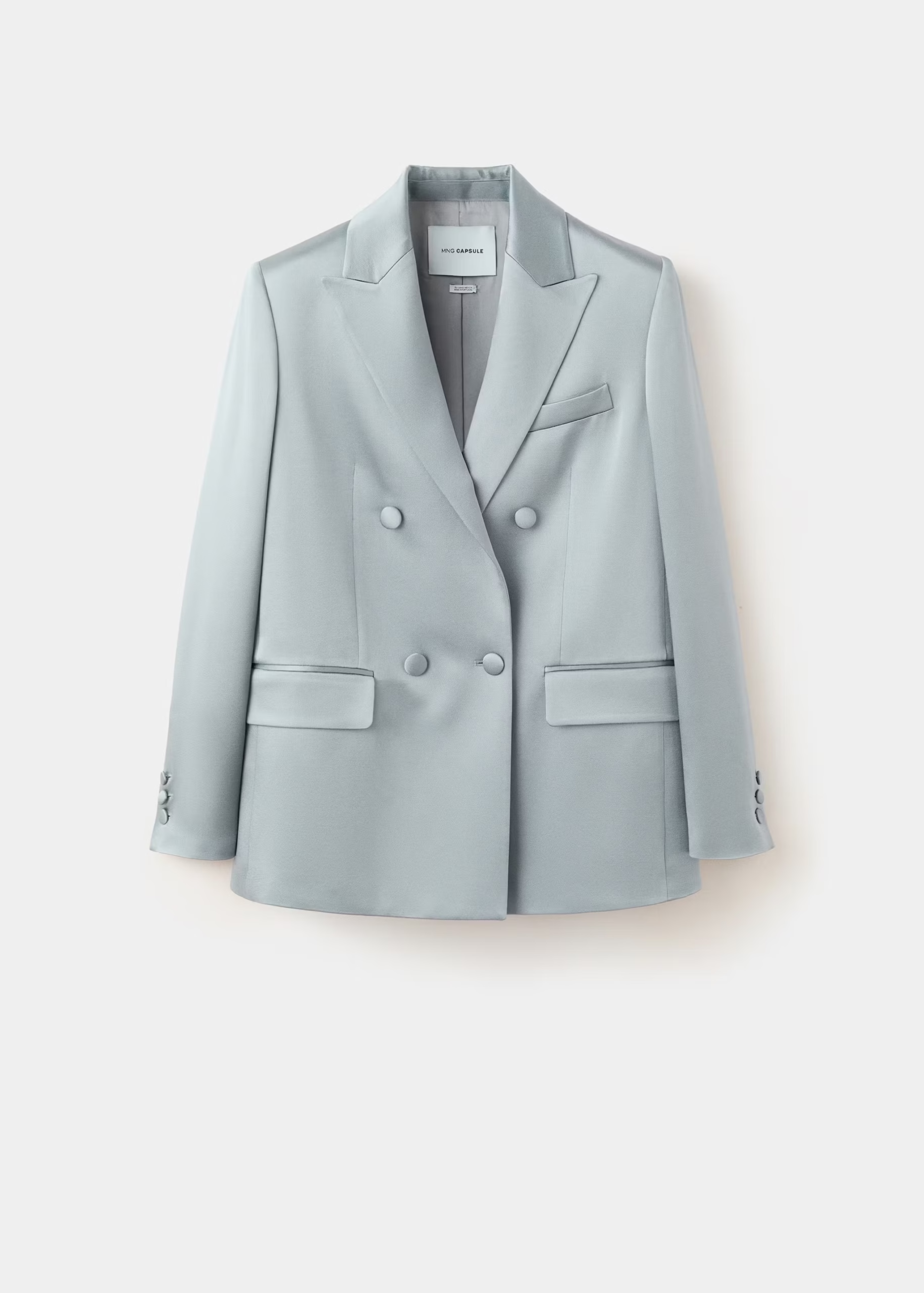
SheerLuxe’s July 2026 silk trend report identified fluid silk separates, bias cut slips and lingerie inspired dressing as important runway directions, highlighting collections from Chloé, Ferragamo, Victoria Beckham and Ralph Lauren. British Vogue similarly explored satin through slip skirts, satin sets, blazers and slip dresses, with the material repeatedly being balanced against tailoring.

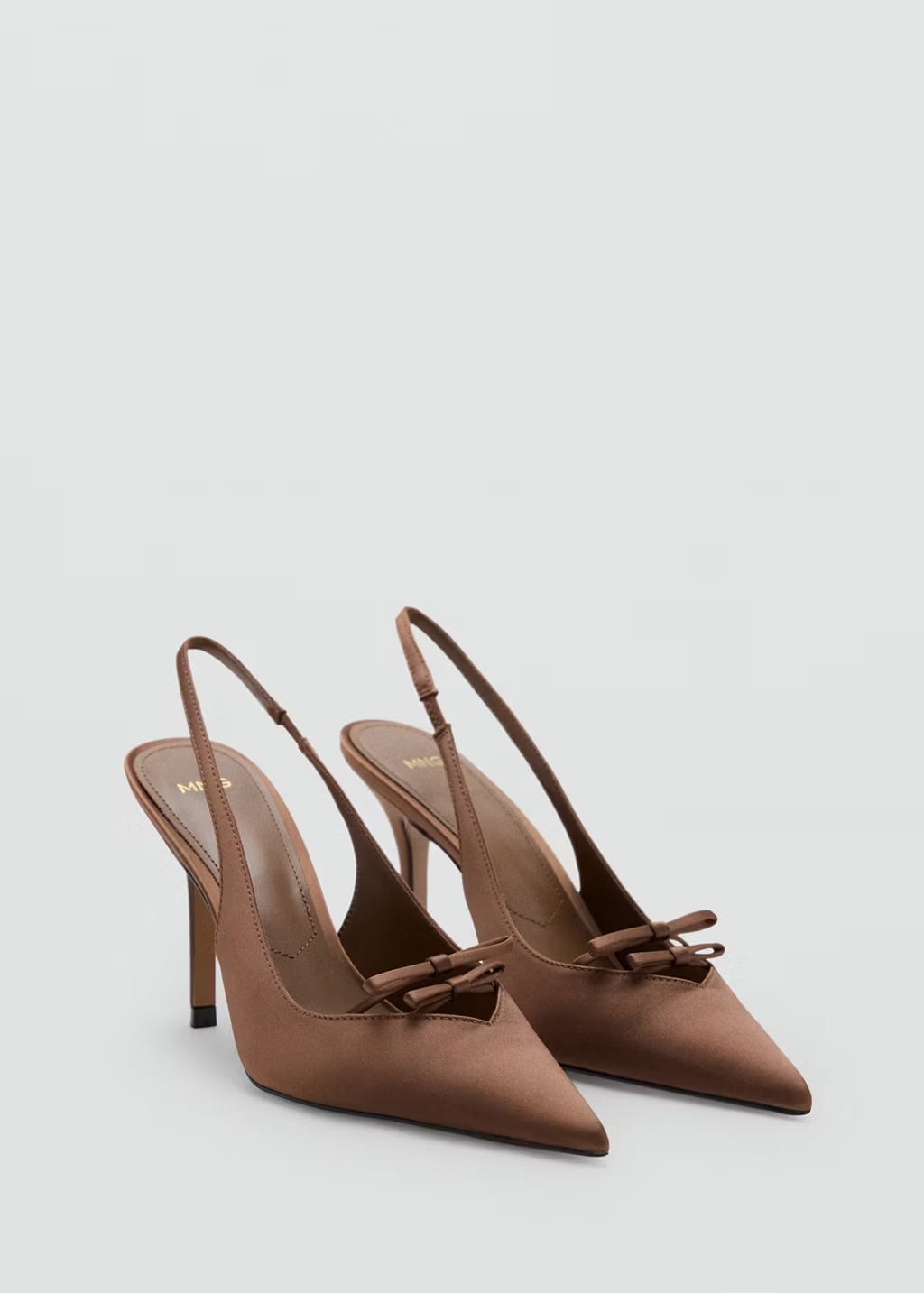
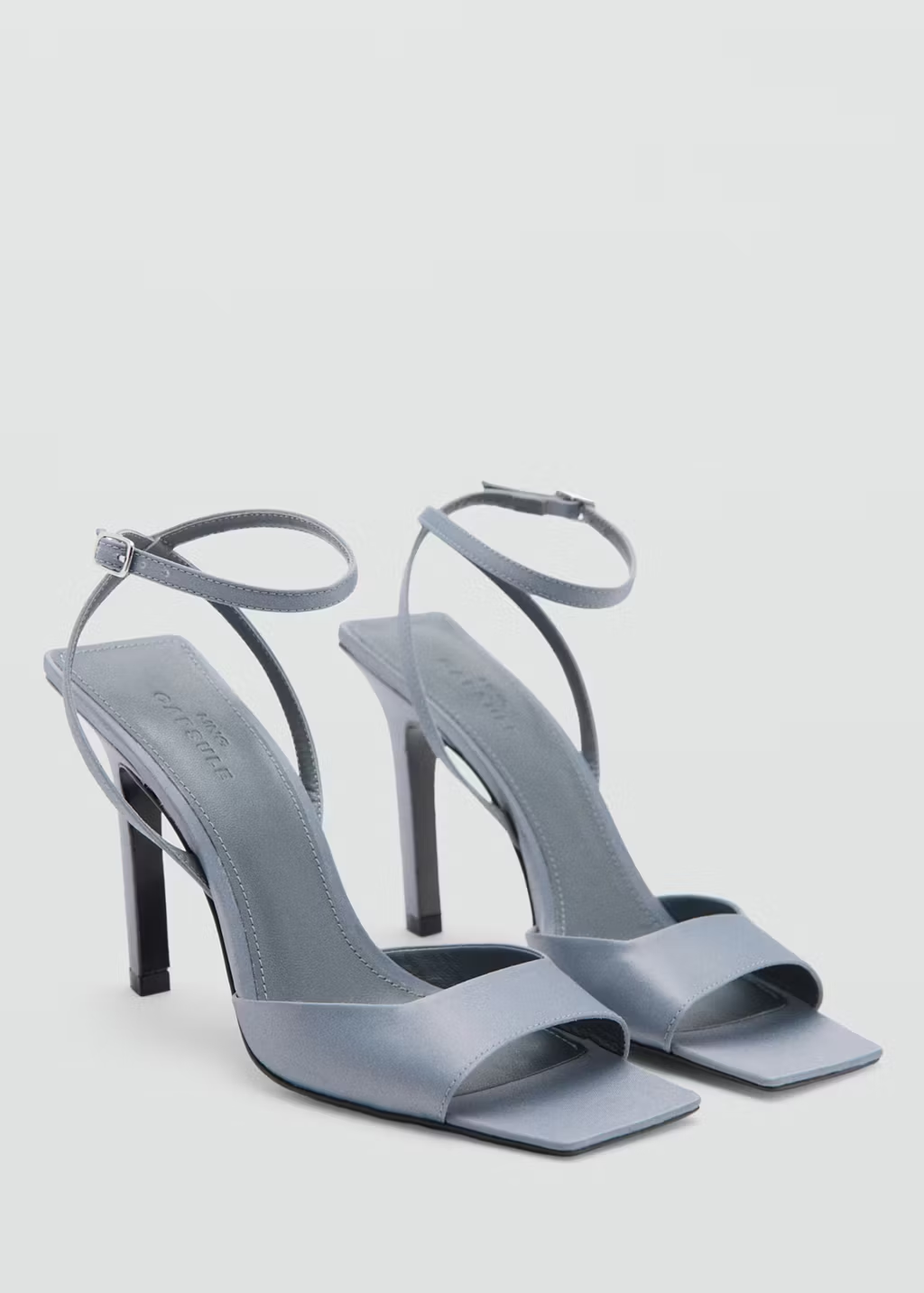
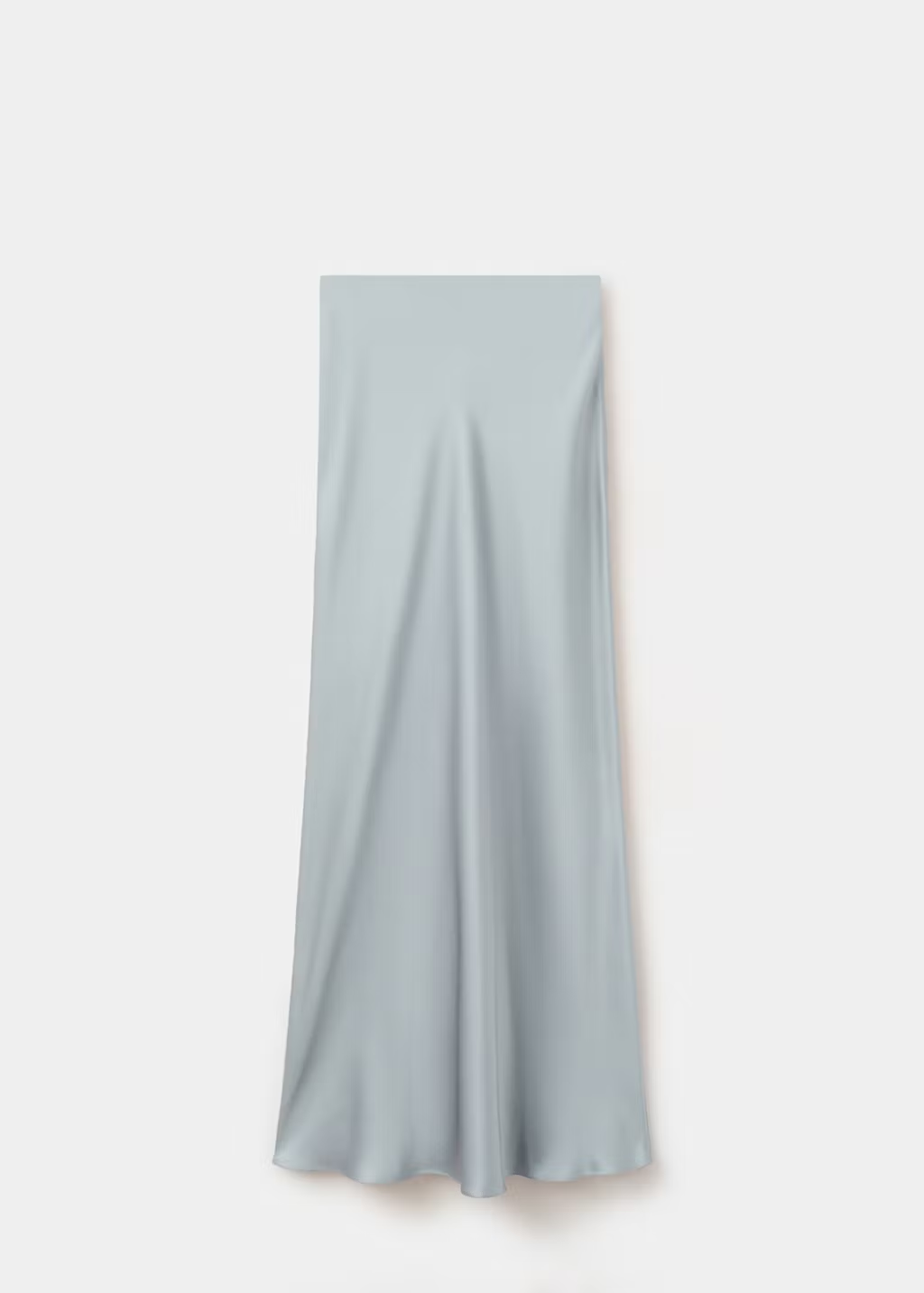
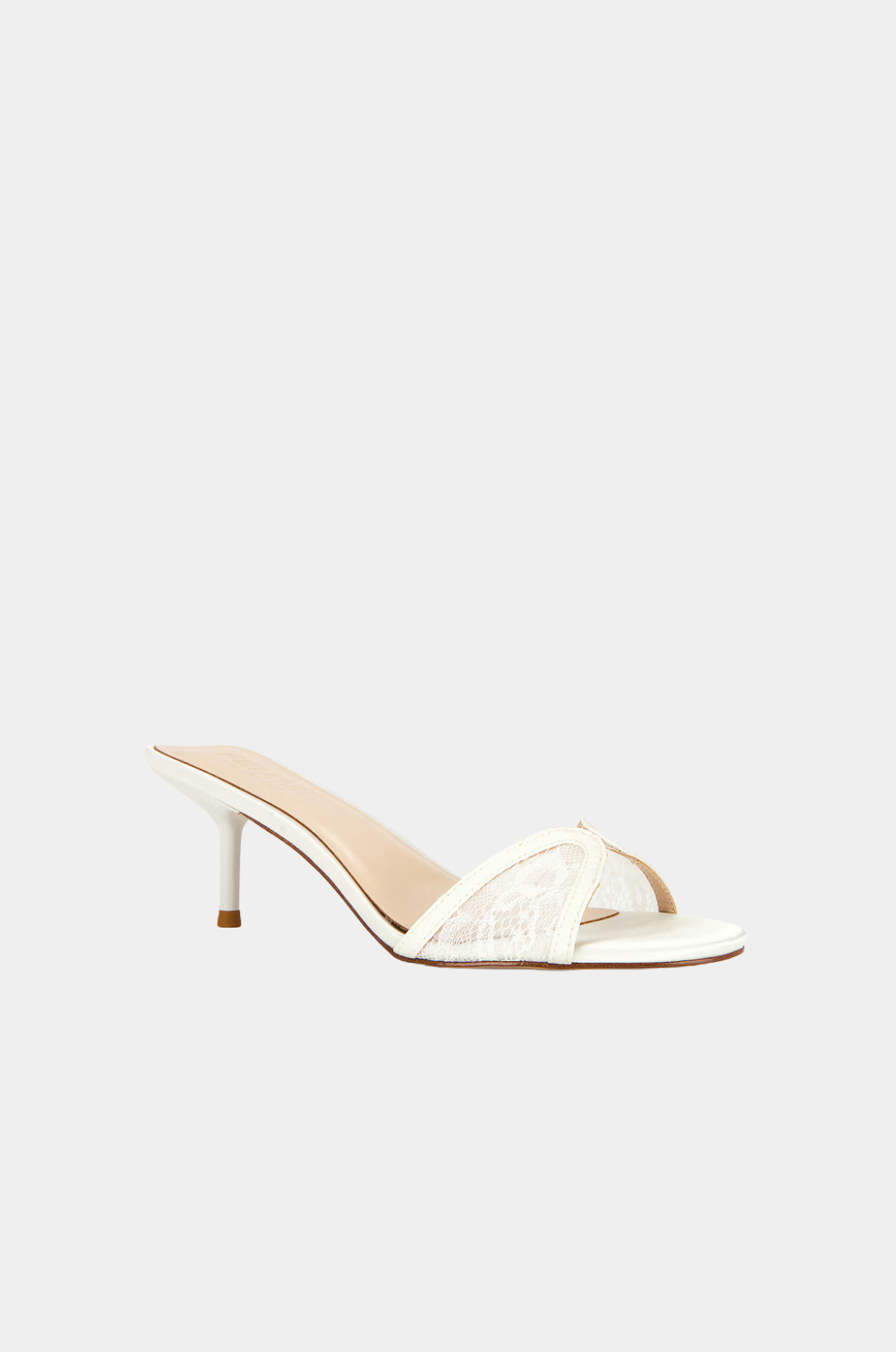
That last detail is crucial. Satin is most interesting when something interrupts its softness. A satin skirt with a sharp blazer. A fluid dress under structured outerwear. A glossy fabric with a matte wool coat. A delicate surface against a substantial shoe.

Harper’s Bazaar was already exploring this tension in Fall 2025, when it focused on taking satin out of the eveningwear category and into daytime dressing. Satin appeared in trousers, jackets, skirts and workwear combinations. The material was being asked to do something different.

It was no longer simply the fabric of an occasion. It became a way of adding light, movement and polish to ordinary clothes.

The Real Trend Is Romance

This is where lace and satin stop being two separate stories. The real trend is romance. Not romance in the sense of bows, pink dresses and obvious femininity. Fashion is approaching romance in a much broader way, through softness, texture, historical references, draping, lace, embroidery, sheer materials and decorative surfaces.

The Fall 2026 collections make that particularly visible. Vogue’s reporting from Paris Fashion Week identified romantic fabrics and silhouettes as a significant part of the season, with lace appearing at Saint Laurent and McQueen among others. At the same time, designers were experimenting with dramatic proportions, textured surfaces and sensual silhouettes.

Fashion is essentially rediscovering the pleasure of decoration. And that matters because decoration had become almost suspicious in the age of minimalism. A garment was supposed to look effortless. The most desirable wardrobe was supposed to appear edited. Luxury was supposed to whisper.

Now, fashion seems increasingly interested in clothes that show their work.

Lace shows its pattern. Satin shows its sheen. Embroidery shows its labour. Draping shows its construction. This is a different idea of sophistication.

Why Lace and Satin Feel Surprisingly Modern Together

Lace and satin are often treated as nostalgic materials, but their current relevance comes from how designers are changing their context.

The fabric itself is not necessarily new. The styling language around it is.

The Power of Contrast in Styling

British Vogue’s current satin coverage repeatedly places fluid pieces next to structured tailoring. This contrast gives delicate materials more authority. It also prevents them from becoming costume. A satin skirt with a soft cardigan can look romantic. A satin skirt with a severe blazer becomes something else entirely. A lace dress can look traditionally feminine. A lace dress with a heavy boot or structured coat can become darker, more modern and more architectural.

The newness is therefore not necessarily in lace or satin. It is in the tension created around them.

This connects directly to Rópard’s earlier analysis, Why the Way a Coat Is Cut Matters More Than the Trend Itself. A trend tells you what is visible. Construction explains why the garment works.

The same principle applies here.

What Does This Mean for Modest Fashion?

This is where the lace and satin conversation becomes particularly interesting.

Both fabrics have traditionally been connected to forms of dressing that emphasize the body. Satin is strongly associated with slip dresses, lingerie inspired silhouettes and bias cuts. Lace is frequently presented through sheer panels, transparent dresses and lingerie references.

At first glance, that might seem to place them at odds with modest dressing. But the fabric itself is not the issue. Construction is.

A lace garment with an opaque lining is fundamentally different from an unlined sheer lace dress. A high neck changes the visual language of lace. A longer sleeve changes its proportion. A satin fabric used in a full length skirt communicates something different from a bias cut slip dress.

The material does not determine the entire meaning of the garment. The way it is cut, layered and proportioned does.

This matters because modest fashion has often been approached as a process of removing things from mainstream fashion. Take away the transparency. Add a sleeve. Lengthen the hem. Cover the neckline.

But the better question is what can be redesigned.

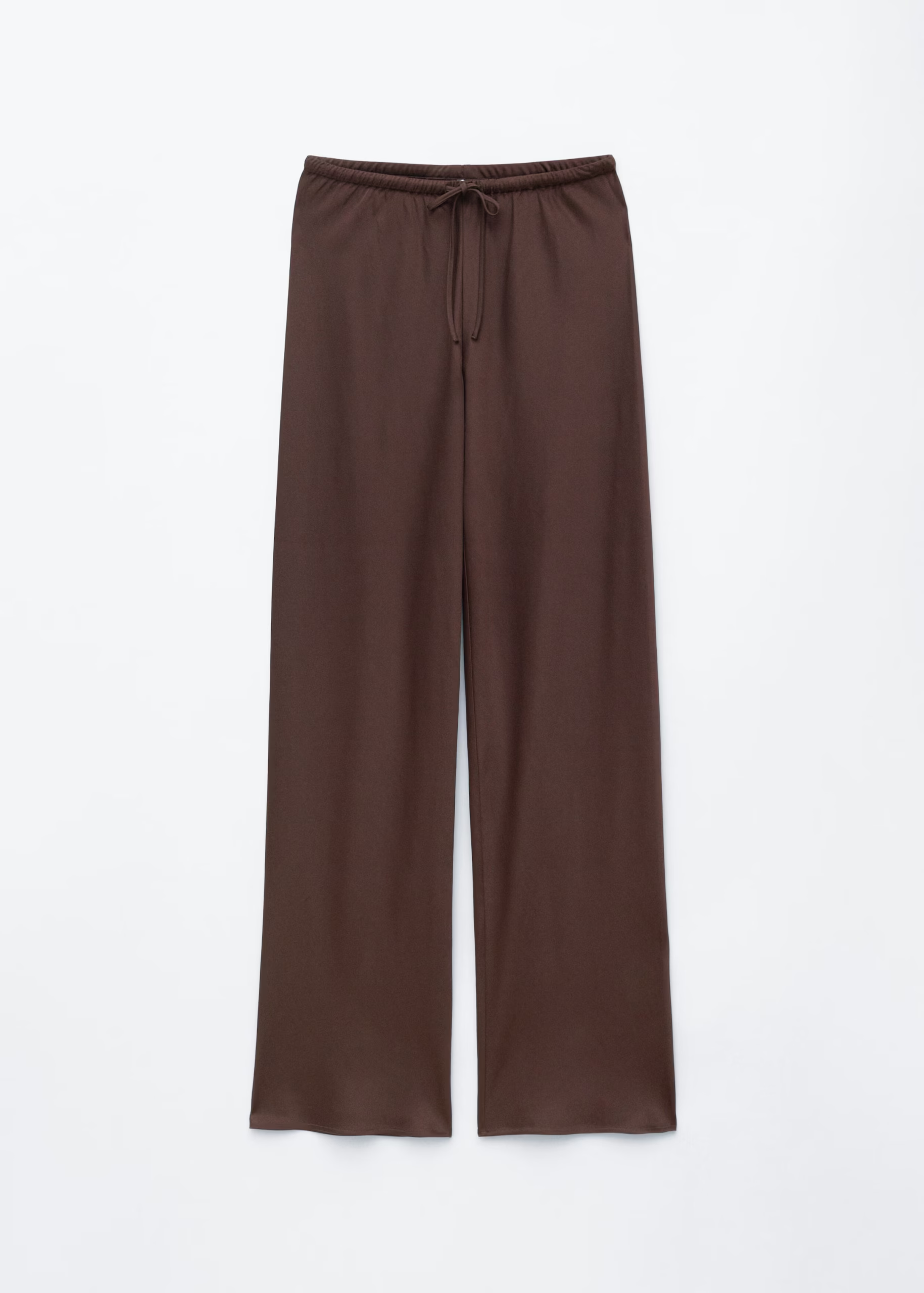
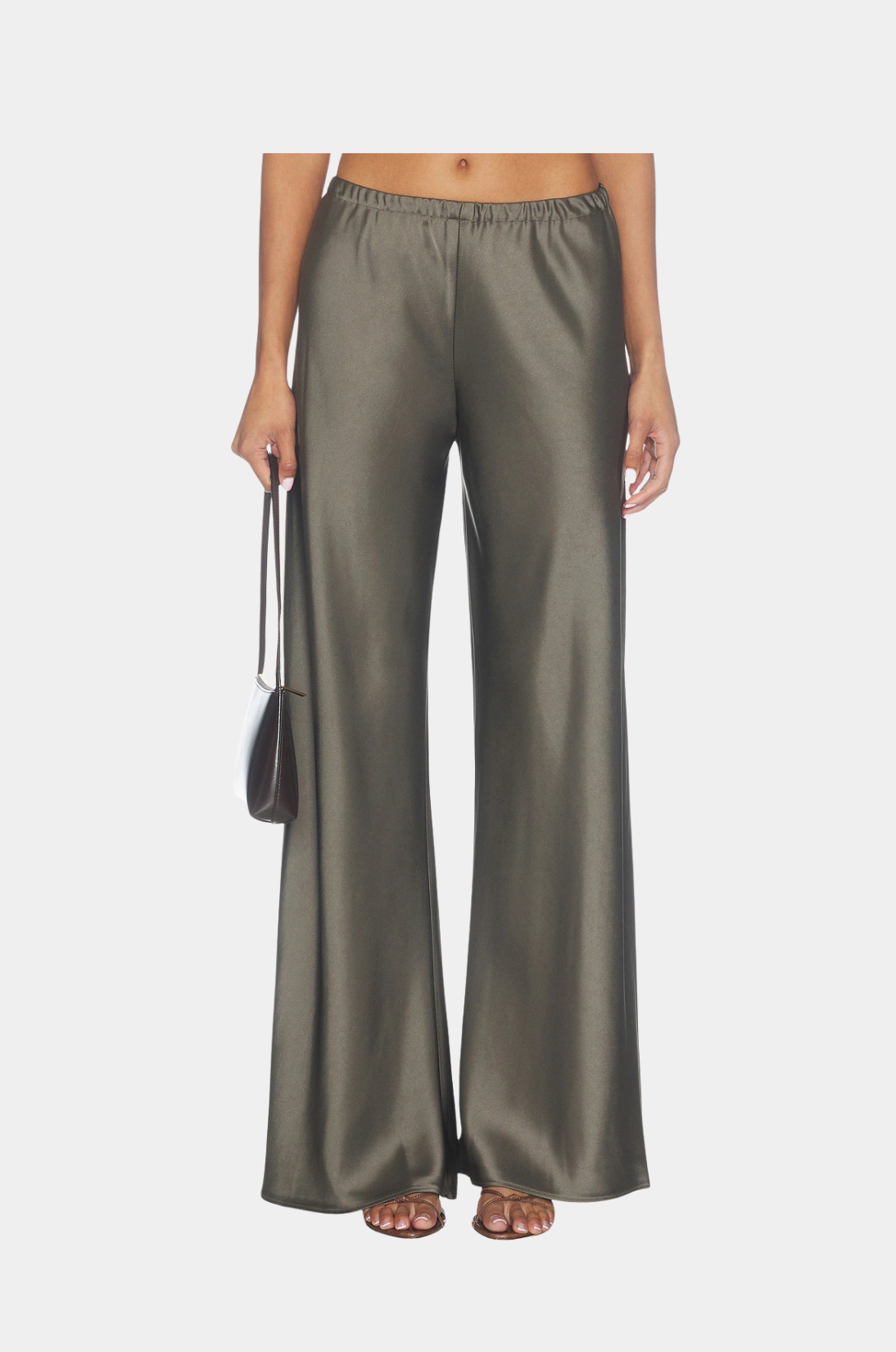
Lace can become an opaque surface rather than a transparent one. It can appear underneath a structured coat or over a solid base. Satin can be used in wide leg trousers, long skirts, high neck blouses, coats and flowing dresses rather than only lingerie inspired silhouettes.

The result does not need to imitate the runway. It can reinterpret it.

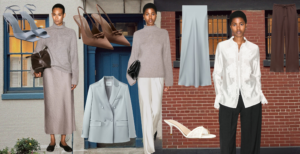
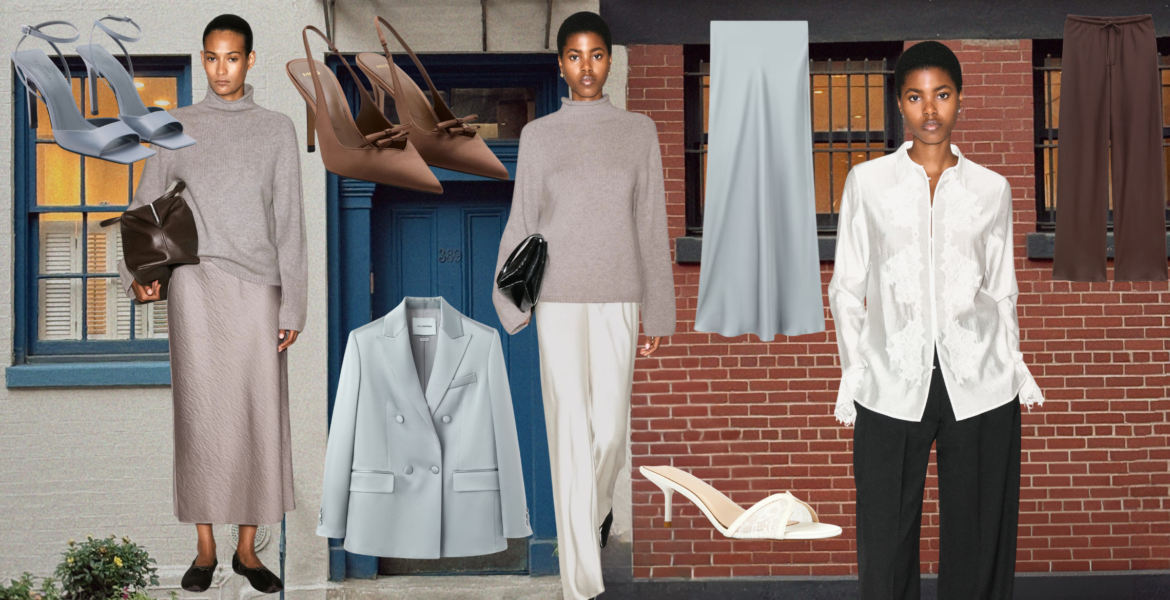
SHOP SATIN & LACE ITEMS

The return of these fabrics creates an opportunity to approach modest fashion through design rather than simply through coverage.

How to Style Lace Modestly

Lace can be used as an opaque surface, layered over a solid base or incorporated into details such as collars and sleeves. A structured coat can also change the character of a lace garment, creating contrast between softness and architecture.

The key is not to remove the visual character of lace, but to control how it interacts with the rest of the silhouette.

How to Style Satin Modestly

Satin works particularly well in long skirts, wide leg trousers, long dresses, blouses and structured outerwear. Because the fabric is fluid and reflective, balancing it with more substantial materials can create a polished silhouette without relying on revealing cuts.

This is where understanding Why Proportion Is Becoming Fashion’s Most Important Trend becomes useful. Proportion determines how volume and length are perceived, while fabric determines how that proportion behaves.

A long satin skirt does not move like a wool skirt. A lace overlay does not read like a cotton blouse. A structured coat over a fluid dress creates a different silhouette from a soft cardigan over the same dress.

Fashion is a system. The material is part of the architecture.

The Return of Lace and Satin Is Really a Return to Texture

Perhaps the biggest reason these fabrics feel relevant now is simple: fashion wants clothes to feel interesting again.

For years, visual sophistication often came through simplicity. Now sophistication can come through surface.

A piece can be beautiful because it catches light, because you can see the work in its construction, because the fabric moves when the wearer walks, or because a familiar historical material has been placed in an unfamiliar silhouette.

That is why lace and satin belong in the same conversation as velvet, embroidery, brocade, fringe and other tactile materials appearing across contemporary collections.

The broader movement is toward clothes with a physical presence. Fashion is remembering that clothing is not an image on a screen. It is material. It has weight. It reflects light. It moves. It folds. It sits differently against the body. Lace and satin simply happen to make those qualities particularly visible.

So, Are Lace and Satin Actually Back?

Yes, but that is not the most interesting conclusion.

The stronger observation is that fashion is using lace and satin to express something it has been moving toward for several seasons: a renewed interest in romance, femininity, texture, historical reference and visible craftsmanship. The fabrics are familiar. The way designers are using them is changing.

For modest dressers, that distinction is even more useful. There is no need to reproduce the slip dress, the sheer lace gown or the lingerie inspired styling exactly as it appears on a runway.

The opportunity is to understand what makes those looks compelling and translate the underlying design language. Maybe that means a long satin skirt beneath a sharply tailored coat. Maybe it is an opaque lace dress with architectural sleeves. Maybe it is a lace collar against a structured jacket. Or maybe it is simply recognising that a fabric can create enough visual interest that an outfit does not need to rely on exposure to feel sensual, elegant or current.

That is the real lesson of lace and satin’s return. The future of modest fashion does not have to be about stepping away from the language of fashion. It can be about becoming fluent enough in that language to speak it differently.

The Rópard Takeaway

Lace and satin are not interesting because they have returned. They are interesting because fashion is changing what their return means.

After years of restraint, designers are once again interested in softness, ornament, texture and femininity. But the strongest looks are not simply romantic. They create tension between delicate and strong, fluid and structured, historical and contemporary.

For modest dressers, that tension opens an even more interesting possibility. You do not have to copy the trend. You can understand it.

And once you understand the fabric, the proportion and the construction, you can make the trend work on your own terms.

Frequently Asked Questions About Lace and Satin Fashion Trends

1. Are lace and satin still in fashion in 2026?

Yes. Lace and satin are both prominent in 2026 fashion coverage and runway reporting. Lace has emerged as a notable Fall 2026 trend across dresses and separates, while satin continues to appear in skirts, dresses, tailoring, footwear and accessories.

2. Why is lace trending again?

Lace is benefiting from a broader return to romance, historical references, ornamentation and tactile dressing. Designers are also using lace in contrasting ways, pairing delicate surfaces with tailoring, leather and heavier silhouettes.

3. Why is satin trending again?

Satin has benefited from the continuing influence of 1990s fashion, lingerie inspired dressing and the shift toward more fluid silhouettes. Designers are also moving satin beyond eveningwear into daytime separates, tailoring, skirts and outerwear.

4. Can lace be part of modest fashion?

Absolutely. The key is construction. Lace can be layered over opaque fabrics, used as a decorative surface, incorporated into long sleeves or high necklines, or balanced with structured outerwear.

5. Can you wear satin modestly?

Yes. Satin works particularly well in long skirts, wide leg trousers, long dresses, blouses and structured outerwear. Because satin is fluid and reflective, balancing it with more structured or opaque materials can create a polished silhouette without relying on revealing cuts.

READ THE PREVIOUS POSTS

Leather jackets styled in oversized, structured and modest silhouettes in Paris
The Styling Atelier

A New Chapter for the Leather Jacket

Leather jackets are entering a new chapter for 2026, moving beyond the classic biker into oversized bombers, refined tailoring and longer silhouettes. Discover what is driving the trend, how to choose quality leather, and how to style it modestly.

Read More »
Lace and satin fashion trends for modest fashion in 2026
The Styling Atelier

Lace and Satin Fashion Trends: Why Romance Is Back in 2026
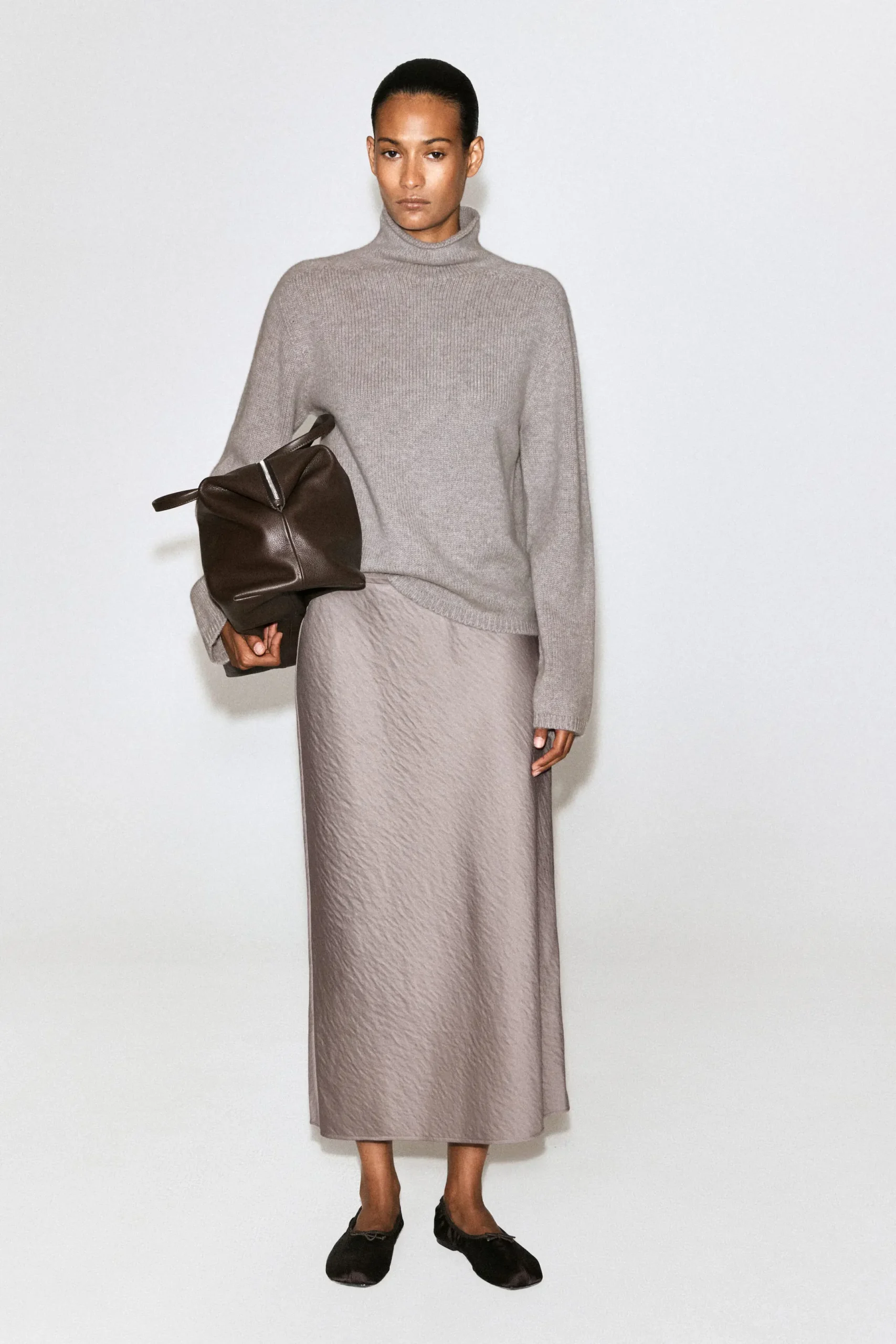
Lace and satin are back for 2026, but the real trend is bigger than the fabrics themselves. Fashion is embracing romance, texture, movement and visible craftsmanship again. For modest fashion, that means these traditionally sensual fabrics can be reinterpreted through layering, proportion and thoughtful construction.
Read More »
Fall trends 2026 collage featuring suede, oversized bags, moccasins and fringe
The Styling Atelier

15 Bold Fall 2026 Trends Every Fashionista Should Watch

Fall 2026 is bringing fashion back to texture, volume, color and personality. From suede and velvet to fringe, barrel jeans, oversized blazers, bold colors and the return of the pencil skirt, discover the 15 trends shaping the new season.

Read More »

Leave A Comment

Leave A Comment

Coveted for its luxury. Revered for its modesty

#Gallery

#Contact