- The Arts of Craftsmanship
- August 17, 2026
- 1
The Art of Maroquinerie: From Moroccan Leather Heritage to French Luxury
There are few materials as closely associated with luxury as leather.
A beautifully constructed handbag, a finely stitched wallet or a perfectly finished leather trunk can become far more than an accessory. With time, it develops a patina. With care, it can last for decades. And at the highest end of the market, the value of the object is not simply found in its logo or price tag, but in the material, construction and human skill behind it.
This is where the world of maroquinerie begins.
The French word is now closely associated with luxury leather goods, from handbags and wallets to belts and travel accessories. Yet its linguistic history points somewhere unexpected: Morocco.
The French word maroquin comes from Maroc, the French name for Morocco. Historically, maroquin referred particularly to a type of goatskin leather associated with Moroccan tanning traditions, while maroquinerie later developed as the French term for leather goods.
That connection opens a much larger story. One that travels from the tanneries of Fez and Marrakech to the workshops of Paris, from traditional leatherworking to the modern luxury industry, and eventually to maisons such as Hermès.
But who gets remembered when craftsmanship becomes luxury?
What Does Maroquinerie Actually Mean?
Maroquinerie is the French term used for leather goods and the craft associated with making them.
Today, the word encompasses products such as handbags, wallets, belts, luggage, small leather goods and other objects made from leather.
But the word carries more history than its modern luxury meaning suggests.
Maroquin itself has a documented history going back centuries. Historically, it referred particularly to goatskin leather prepared through traditional tanning processes.
In other words, before maroquinerie became associated with Parisian luxury boutiques and maisons, the vocabulary of the material was already carrying a reference to Morocco.
These three looks focus on exactly that: versatile pieces, elegant proportions, neutral colors, and accessories that make the outfit feel considered rather than overly styled.
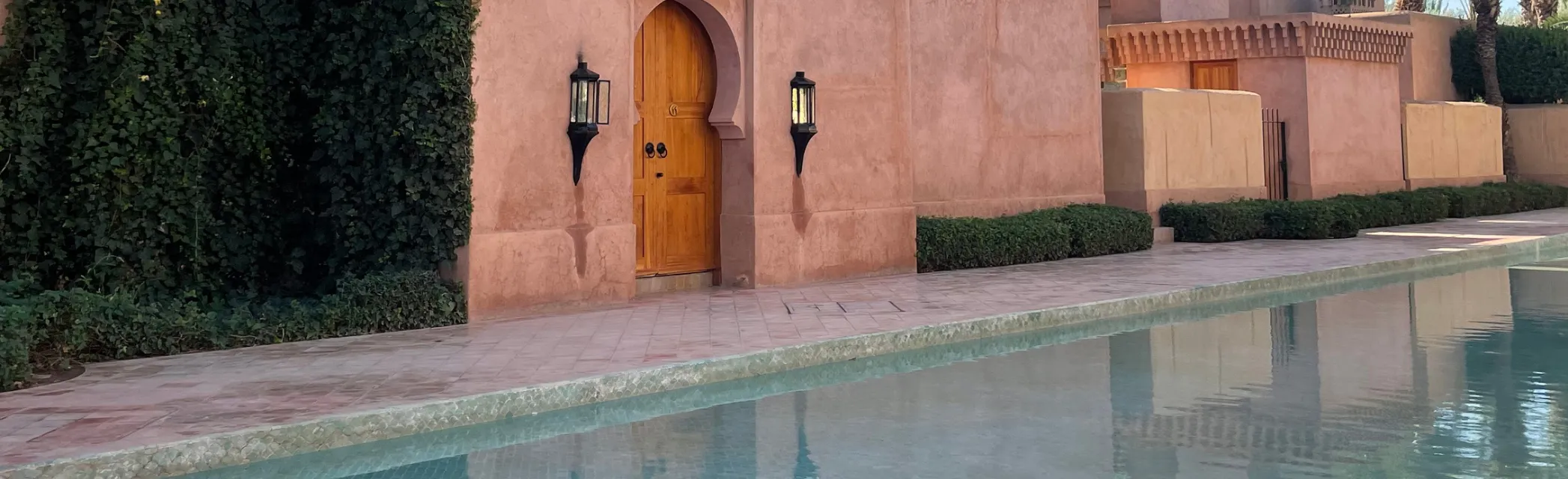
Morocco and the Leather Heritage Behind the Word
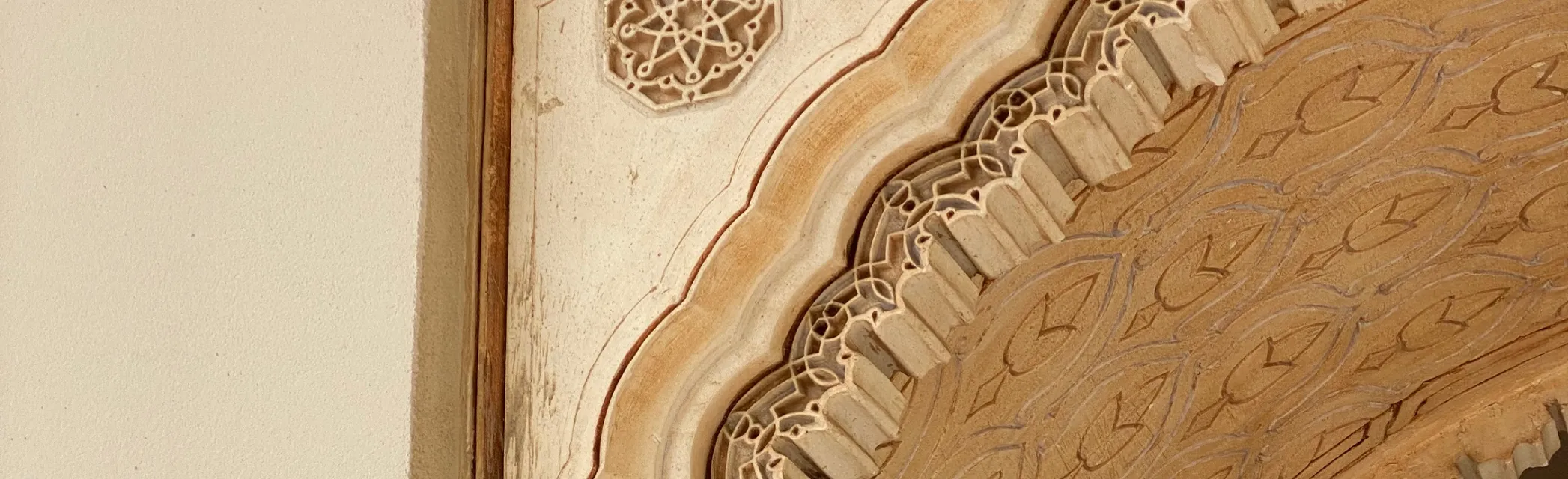
Leatherworking is deeply embedded in Morocco’s artisanal history.
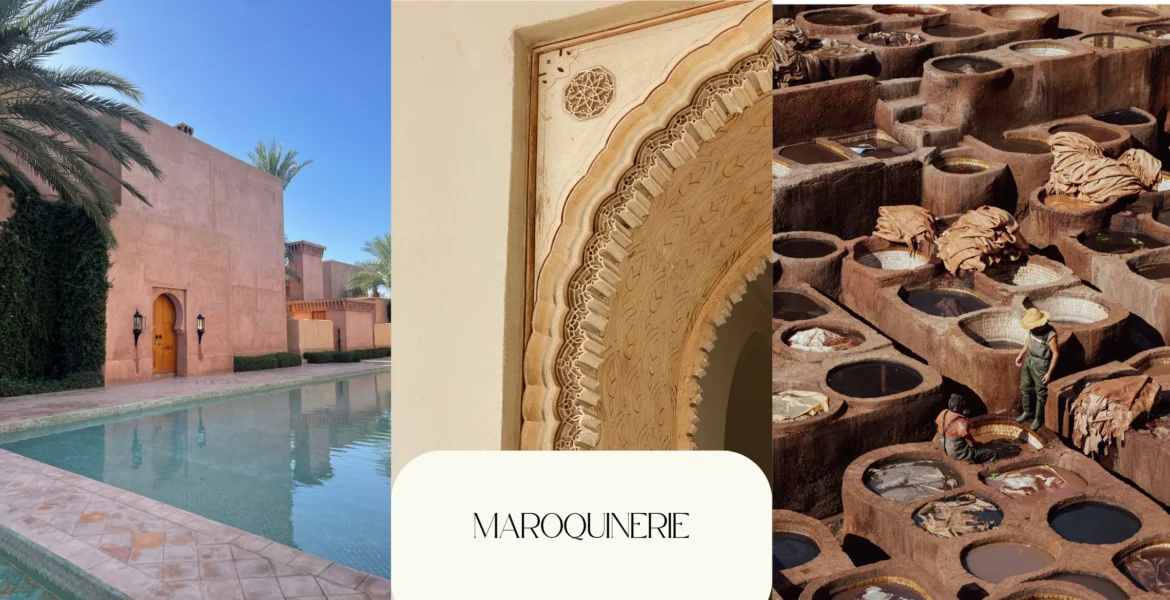
Moroccan leather craftsmanship developed through specialized trades, including tanning, dyeing and leatherworking. Cities such as Fez and Marrakech became particularly renowned for their leather products, from bags and wallets to slippers, poufs and other accessories.
Fez is particularly important to this story.
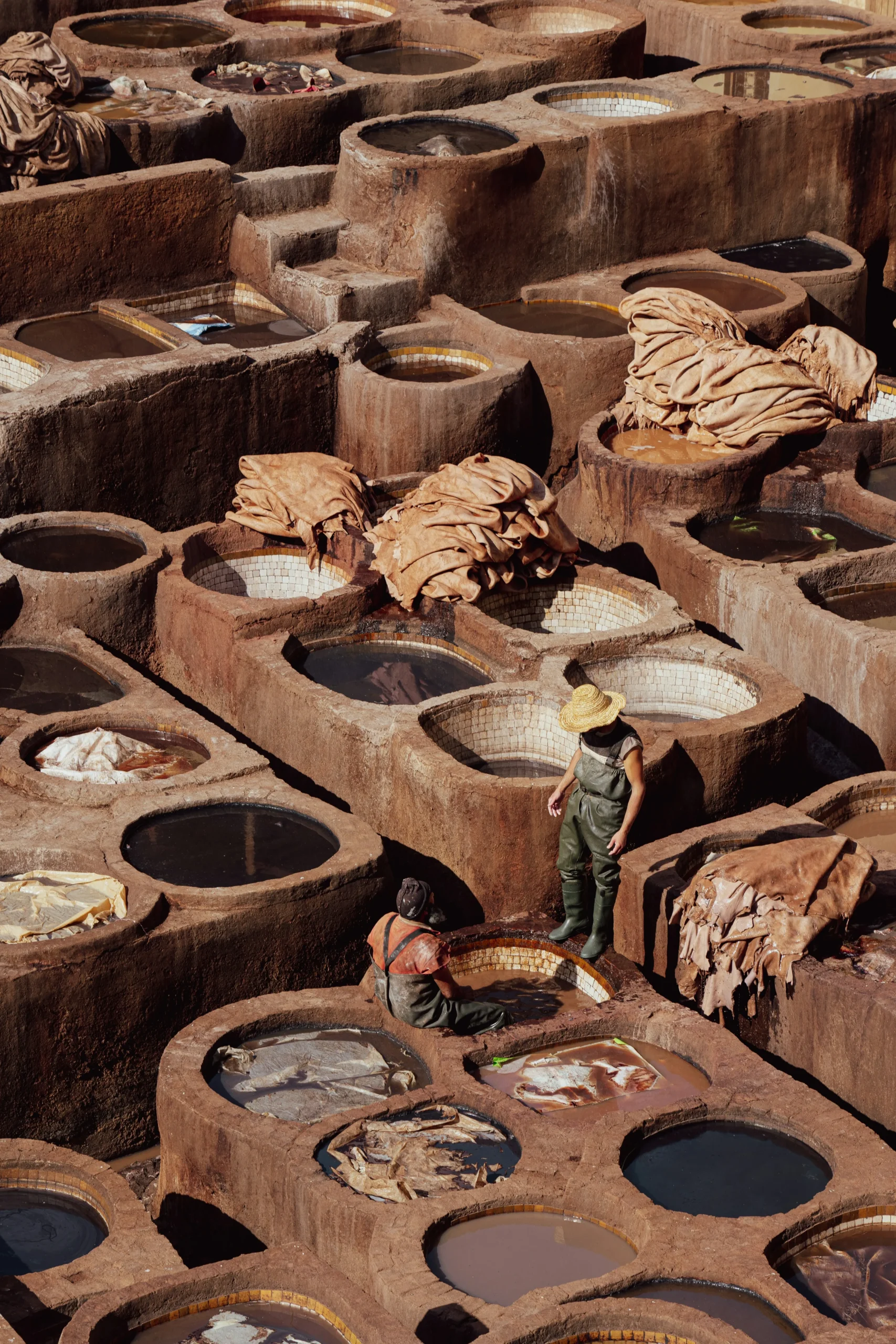
The city’s traditional tanneries form part of an artisanal system that has existed for centuries. Historical research traces the traditional tannery system in Fez back approximately twelve centuries, with medieval sources documenting a significant number of tanneries operating within the medina.
The significance of the tannery was not merely practical. Leather represented trade, employment, wealth and specialized knowledge. The craft was divided between different specialists, with hides passing through stages of tanning, colouring and leatherworking before becoming finished objects.
That distinction matters. A leather bag does not begin with a designer sketch. It begins much earlier, with a material and the people who know how to transform it.
For the first look, the foundation is a pair of relaxed, wide-leg jeans paired with a crisp white T-shirt and a cable-knit cashmere jumper. The combination feels casual enough for everyday wear, but the textures and proportions give it a more elevated finish.
The result is the kind of modest fall outfit that can take you from a morning coffee to a day of errands, university, work, or a casual lunch without feeling underdressed.
Morocco’s relationship with craftsmanship extends far beyond leather. From traditional caftans to handworked textiles, the country’s artisans continue to shape its fashion identity. Read our guide to Caftan Week 2026 in Marrakesh to explore another expression of Moroccan craftsmanship.
From Raw Hide to Maroquin
Traditional Moroccan leatherworking involved techniques that transformed animal hides into supple, durable and richly coloured leather.
Historically, maroquin was particularly associated with goatskin and vegetable tanning. The material became valued for qualities that are still central to luxury leather today: flexibility, durability, texture and its ability to take colour.
This is one reason leather became so important beyond clothing.
It could become a book cover, a wallet, a shoe, a saddle, a travel case or a handbag. The same material could be transformed according to the skill of the artisan. And Morocco was not isolated from the wider Mediterranean world.
Leather moved through trade networks, crossing borders and cultures. The history of maroquin itself reflects the movement of materials and leatherworking knowledge between North Africa, the Islamic world and Europe.
The story, therefore, was never simply Morocco versus Europe. It was a history of exchange. But exchange does not always mean equality.
When Craftsmanship Becomes Luxury
At some point, craftsmanship stops being viewed simply as a practical skill and begins to acquire another value: exclusivity.
- A handmade object takes time.
- A skilled artisan takes years to train.
- A particular leather may have a distinctive grain.
- A technique may require hundreds or thousands of repetitions before it becomes instinctive.
- And once those elements become scarce, they become valuable.
This is one of the foundations of modern luxury.
The luxury industry has become exceptionally skilled at transforming craftsmanship into desirability. A technique becomes a signature. A material becomes recognizable. A workshop becomes part of a brand’s mythology. The artisan becomes part of the story.
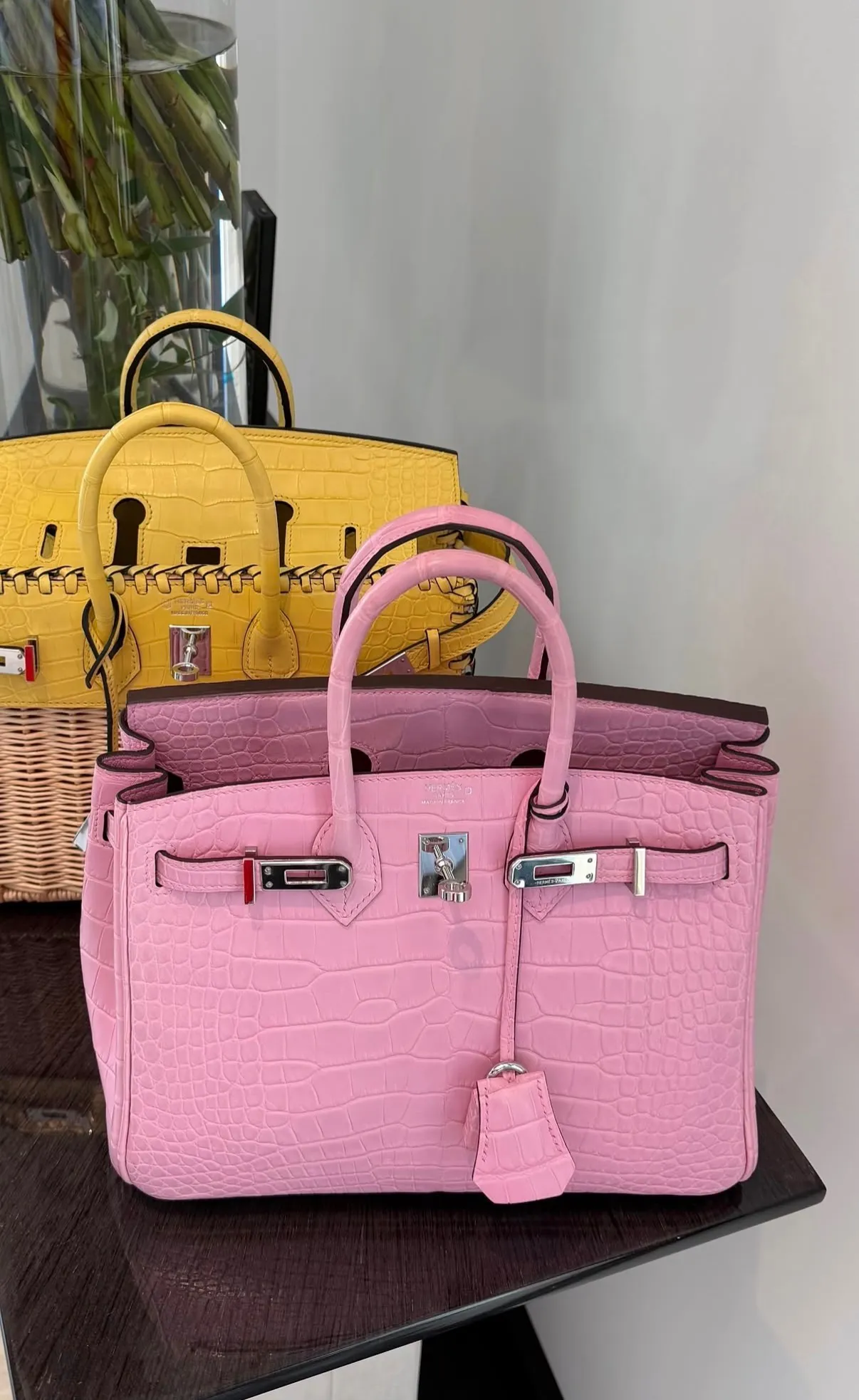
Few houses demonstrate this more successfully than Hermès.
Hermès and the Rise of French Luxury Maroquinerie
Hermès was founded in Paris in 1837, when Thierry Hermès opened a workshop specialising in harnesses and saddlery. The house’s origins therefore lie not in handbags, but in equestrian craftsmanship.
This distinction is important. Hermès did not begin as a handbag company. Its early expertise was leather, saddlery, harness-making and the construction of objects designed to withstand use.
Over generations, that expertise expanded into the broader world of leather goods.
Today, leather remains at the centre of the house’s identity. Hermès states that its leather goods are handmade in France by thousands of saddler-leather craftsmen working across its manufactures.
The house has also invested heavily in the transmission of its knowledge through specialist training.
This is where Hermès’ luxury proposition becomes particularly interesting.
The brand is not simply selling leather. It is selling savoir-faire.
The Saddle Stitch: When Technique Becomes a Signature
One of the clearest examples is the saddle stitch.
The technique originates from the world of saddlery, where strong and reliable stitching was essential. At Hermès, this tradition became part of the house’s leatherworking identity.
The stitch is not decorative simply for the sake of appearance. It is connected to the practical requirements of constructing objects that need to endure.
That philosophy continues to shape Hermès today. The house emphasizes craftsmanship, quality and products designed to last, be repaired and potentially be passed from one generation to another.
This is an important distinction in an industry increasingly dominated by speed. Luxury leatherworking operates on another timeline. The object is supposed to outlive the season.
Did Hermès “Take” Moroccan Maroquinerie?
This is where the history becomes more complicated.
It is tempting to construct a simple narrative: Morocco created leather craftsmanship, France took it, and Hermès turned it into luxury.
But the historical record does not support such a straightforward claim.
The connection between Morocco and maroquin is real and well documented. The French word itself derives from Maroc, and Moroccan leatherworking has a centuries-old history.
But Hermès was founded in 1837, decades before Morocco became a French protectorate in 1912.
That timeline makes it historically inaccurate to claim that Hermès’ maroquinerie was created through the French colonial presence in Morocco.
There is also no reliable evidence establishing that Hermès specifically appropriated particular ancient Moroccan leather techniques and then claimed them as its own.
That does not mean the broader question of cultural appropriation disappears.
Quite the opposite.
The Bigger Question: Who Gets Credit for Craftsmanship?
The more interesting question is how traditional craftsmanship becomes separated from its cultural origins as it travels.
Moroccan leather traditions existed long before the modern luxury industry. Over centuries, leatherworking knowledge moved between regions, artisans and markets. Some techniques evolved, some were adapted and others became associated with different cultural contexts.
Once these practices enter global luxury markets, however, the story can change.
The artisan who performs the work may disappear behind the brand. The origin of a material may become a footnote. A centuries-old technique can become a “signature” of a luxury house. And a cultural craft can eventually be understood by consumers primarily through the name of the company selling it.
This is not unique to Hermès. It is a much broader question about the relationship between luxury, heritage and power.
It is also why Morocco’s contribution to the history of maroquinerie deserves to be discussed alongside the French luxury houses that later helped define the modern category.
The point is not to diminish Hermès’ genuine craftsmanship. It is to make the history larger.
Hermès has developed an extraordinary and highly structured leatherworking tradition of its own, including workshops, training systems, material selection and generations of specialist knowledge. But the existence of exceptional French craftsmanship does not erase the much older and wider history of leatherworking across North Africa, the Mediterranean and the Middle East.
Luxury should not require forgetting where craftsmanship came from.
Morocco, France and the Making of a Modern Luxury Language
The history of maroquinerie is therefore not a story with a single inventor.
It is a story of movement. Materials moved. Artisans moved. Techniques travelled. Languages absorbed foreign words. Markets transformed practical objects into luxury goods. And eventually, fashion houses built entire identities around craftsmanship.
France became one of the world’s most influential centres of luxury leather goods, while Morocco retained a powerful living leather tradition, particularly in cities such as Fez and Marrakech.
The difference today is not necessarily whether one culture possesses craftsmanship and another does not.
It is who has the infrastructure, capital, global distribution and cultural authority to turn craftsmanship into a luxury narrative.
That is where the modern luxury industry becomes especially powerful.
It can take something handmade and turn it into a symbol.
A handbag becomes status. A stitch becomes a signature. A workshop becomes mythology. A material becomes an investment. And the object becomes part of a consumer’s identity.
Yet underneath all of this remains something remarkably simple:
Leather still has to be cut. It still has to be shaped. It still has to be stitched.
And somebody still has to know how to do it.
What Moroccan Leather Heritage Can Teach Modern Luxury
Morocco’s leather tradition offers a different understanding of luxury.
It reminds us that craftsmanship does not begin with a logo. It begins with knowledge. It begins with material. It begins with hands.
The tanner, dyer and leatherworker are not secondary characters in the story of luxury. They are part of its foundation. That is particularly relevant today, when consumers are increasingly interested in provenance, craftsmanship, longevity and cultural heritage. The future of luxury may not simply belong to the brands with the most recognizable logos.
It may belong to the brands that can tell the most honest story about how an object was made, who made it, where its materials came from and which traditions influenced its creation.
This same shift toward craftsmanship, identity and representation can be seen across contemporary modest fashion, particularly as the movement continues to develop into a global fashion conversation. Read our analysis of Modest Fashion Week 2026.
For Morocco, that means looking beyond the souvenir-shop image of leather slippers and colourful tanneries. The country’s leather heritage represents a sophisticated artisanal tradition with centuries of history.
And for the luxury industry, it raises a question worth asking:
Can luxury celebrate craftsmanship without erasing the cultures that helped shape it?
Perhaps that is the next evolution of maroquinerie. Not simply making beautiful leather goods, but telling a more complete story about the hands, places and histories behind them.
Frequently Asked Questions About Maroquinerie
1. What does maroquinerie mean?
Maroquinerie is the French term for leather goods and the craft of producing them. It includes products such as handbags, wallets, belts, luggage and other leather accessories. The word derives from maroquin, a term historically associated with Moroccan-origin goatskin leather.
2. Why is maroquinerie associated with Morocco?
The connection comes from the word maroquin, which derives from Maroc, meaning Morocco in French. Historically, maroquin referred to goatskin leather associated with Moroccan tanning traditions.
3. Is Moroccan leather still made today?
Yes. Traditional leatherworking remains an important part of Morocco’s artisanal sector, particularly in Fez and Marrakech. Fez’s historic tanneries continue to form part of the city’s living craft economy.
4. Is Hermès Moroccan?
No. Hermès is a French luxury house founded in Paris in 1837 by Thierry Hermès as a harness-making workshop. Its leatherworking heritage developed from French saddlery and equestrian craftsmanship.
5. Did Hermès steal Moroccan maroquinerie?
There is not sufficient reliable historical evidence to state that Hermès specifically stole ancient Moroccan leatherworking techniques.
What can be established is that the French term maroquin has Moroccan roots and that Morocco has a centuries-old leatherworking tradition. Hermès developed its own leather and saddlery heritage from its Parisian workshop beginning in 1837, before the French protectorate of Morocco began in 1912.
The broader question of how European luxury industries have interacted with, adapted and sometimes obscured non-European craft traditions remains an important conversation.
6. What makes luxury leather goods different?
Luxury leather goods typically place greater emphasis on material selection, construction, craftsmanship, finishing, durability and repairability. At the highest level of luxury, the construction of the object becomes part of its value rather than simply a means of producing it.
7. What is the difference between leather and maroquinerie?
Leather is the material. Maroquinerie refers to leather goods and the craft of transforming leather into finished objects such as bags, wallets and accessories.
8. Why does craftsmanship matter in luxury?
Craftsmanship adds knowledge, time and human expertise to the material. At the highest level of luxury, the making of the object becomes part of its value, history and identity.
READ THE PREVIOUS POSTS

Why Proportion Is the Secret Behind a Great Outfit
Proportion can make the difference between an outfit that feels off and one that feels intentional. Learn how body proportions, garment length, waist placement, and volume work together to create a balanced silhouette.

The Cut of a Coat Matters More Than the Trend
A coat can follow every trend and still look wrong. The secret is often in the cut. Discover why coat fit, silhouette, fabric, and construction matter more than seasonal fashion trends.

Save the date, Fashion Month is about to begin!
Fashion Month 2026 is here. Save the dates for Venice, New York, London, Milan, and Paris, and discover what to watch from a modest fashion perspective.

#Comment
Fashion Month 2026: 5 Essential Dates You Cannot Miss in 2026
[…] details that make a garment feel considered. That same attention to quality sits at the heart of the art of maroquinerie, where craftsmanship becomes part of a fashion house’s […]